With awards season upon us, it’s usually this time of year that old Academy Award winning favorites are televised in advance of this year’s Oscar ceremony (thanks Turner Classic Movies!). I’ve never really been a fan of the awards presentations, and most of my favorite films were never nominated anyway, but it is nice to turn on a channel like TCM and watch an old classic again. I look at this year’s list of Best Picture nominees and wonder if decades from now American Hustle, Gravity or The Wolf of Wall Street could ever be as revered among movie fans as Casablanca, On the Waterfront, The Godfather or Rocky.
Each decade of the last century has produced its timeless classics of cinema, but lately I’ve been reading about how 1939 is considered one of the greatest, if not the greatest year for films. Looking over the list of releases that year it’s a solid lineup, all of them classics to this day:
Gone With the Wind The Wizard of Oz Stagecoach Mr. Smith Goes to Washington Goodbye, Mr. Chips The Hunchback of Notre Dame Love Affair Of Mice and Men Gunga Din Ninotchka The Women Stanley and Livingstone Destry Rides Again Beau Geste Babes in Arms Gulliver’s Travels Jesse James The Roaring Twenties Wuthering Heights Young Mr. Lincoln
Whether 1939 was actually the greatest year for films is an argument that I’m personally hesitant to make since 1940 had it’s own list of classics that year including The Grapes of Wrath, The Philadelphia Story and His Girl Friday.
But when a lineup includes films like the epic Gone With the Wind, incredible performances in Wuthering Heights and Mr. Smith Goes to Washington, and a perennial family favorite like The Wizard of Oz, there’s no denying there was something special about the films of 1939. And to commemorate the 75th anniversary of that celebrated year of moviemaking, Fante’s Inferno will revisit some of the classic films released that year in a four-part retrospective that will be posted in conjunction with the quarters in which they were released.
Part one of our retrospective will begin with several notable films released between January and March of 1939: John Ford’s classic Western Stagecoach starring John Wayne; George Stevens’ Gunga Din starring Cary Grant; and Leo McCarey’s twice remade Love Affair starring Irene Dunne and Charles Boyer.
Starring: Albert Brooks, Julie Hagerty and Garry Marshall
Directed by Albert Brooks; Written by Albert Brooks and Monica Johnson
Albert Brooks’ 1985 comedy Lost In America is a film that I’ve been looking forward to revisiting for awhile now. I’d seen it on cable TV back in the late 80’s and while I enjoyed it, I realize now that a lot of the humor was lost on me at the time. As a teenager I wasn’t able to fully understand or empathize with Albert Brooks’ and Julie Hagerty’s characters reasons for dropping out of the corporate world and their eventual plight on the road to start their new lives. Revisiting this film almost 25 years later allowed me to enjoy it on a new level.
The movie begins with David Howard (played by Brooks) unable to sleep as he second guesses the decision to sell his house after it’s already closed. He’s talked down by his patient wife Linda (played by Hagerty) but once she’s convinced him it was the right decision he begins to overthink whether their new house was the right one to buy. The next day David’s commitment/decision making issues continue at work when he calls the Mercedes dealership for the umpteenth time before finally making the decision to order his new car. He meets with his boss expecting to get a promotion to Senior Vice President, only to find out the agency gave the promotion to a less qualified employee and David is being transferred to the New York office to work on the Ford campaign. He doesn’t take the news well, curses out his boss, quits/gets fired, and storms out before he can be thrown out by security.
David bursts into Linda’s office and convinces her to quit her job and drop out of the corporate life with him. That night they look up property listings in the East and decide to cash out and leave Los Angeles to drive across America and live off of their nest egg like Easy Rider. Their quest to find freedom on the road is not without sacrifice of comfort: instead of motorcycles they get a top of the line Winnebago (complete with a microwave that includes a browning setting that David can’t stop raving about). They stop in Las Vegas on the first night of their new lives and while David would prefer to spend the night in a trailer park, Linda convinces him to splurge on a hotel room and enjoy themselves for a night. It starts off on the wrong foot when they’re forced to grease the manager’s palm for the only available room (a junior bridal suite with two heart shaped twin beds), but only gets worse when David wakes up the next morning with no sign of Linda.
He finds her in the casino frazzled on an adrenaline rush and at the tail end of an all night losing streak at the roulette table. He’s advised by the casino manager (played brilliantly by Garry Marshall) that she’s seriously in the hole, and when he is finally able to pull Linda away from the table he finds out she apparently has a latent gambling addiction and she’s lost almost all of their $100,000 nest egg in a matter of hours. The best scene in the film is David’s sincere yet hopeless attempt to get the casino to give them their money back. With barely $1,000 of their nest egg left, they’re forced to stop in a sleepy Arizona town and find any job they can get.
As a 40-something with a mortgage and 20+ years in the corporate world, I can now empathize with the sentiment (and folly) of David and Linda’s quest for freedom. The story isn’t preachy about dropping out or making a statement about 80’s excess, it’s about two people that make a wrong turn in their journey and have to dig themselves out of a hole.
For me the humor comes from the sense of irony that David and Linda didn’t throw caution to the wind, give their money away and try to live off the grid. They know from the very beginning that the one thing they’ll need to start their new life is money. What makes the story effective is that they’re doing everything right and it still blows up in their faces. Even the plan to quit their jobs is planned according to their finances, it’s only an impromptu night in Las Vegas and a latent gambling addiction that knocks them off course. No excuses, no corporate enemy, just personal responsibility and starting over. Brooks and Hagerty have great chemistry as each unexpected bump in the road tests their marriage and their plan for a new life. Brooks drags out their plight so effectively the audience forgets they’re only several days into their journey. This film is a gem.
Release Date: December 7, 1970 (Sweden); May 16, 1971 (US)
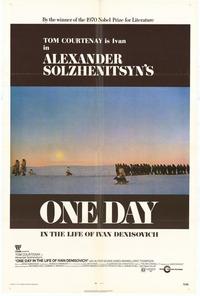
Starring Tom Courtenay, Espen Skjonberg, Alf Malland, James Maxwell, Alfred Burke, Maxwell Thompson
Directed by Caspar Wrede; Screenplay by Ronald Harwood, based on the novel One Day in the Life of Ivan Denisovich by Alexandr Solzhenitsyn
Going into this weekend, my goal was to kick back and enjoy a few movies. The blizzard and freezing weather in the Northeast inspired me to find a winter themed movie to fit my surroundings, but this turned out to be more of a challenge than I thought it would be. My old standby for this weather is John Carpenter’s amazing The Thing, but I had already covered this film in my retrospective of The Summer of ’82. I looked up other films set in winter and noticed most had a holiday theme and I had seen them in the weeks leading up to Christmas. But out of the blue I remembered the film adaptation of Alexandr Solzhenitsyn’s book One Day in the Life of Ivan Denisovich, and I decided to track it down.
Alexandr Solzhenitsyn’s classic novel about life in Stalin era labor camp was required reading for me sophomore year of high school. It stayed with me over the years, even inspiring me to study Russian language in high school and college. But I first learned about the film version several years ago as a result of a random IMDB search, and since then it’s been a curiosity for me because it’s extremely hard to find (except in terrible quality on YouTube – my only option) and the book hasn’t been tackled as a feature film again. But what I find more curious was how this film could be completely forgotten in the first place.
Director Caspar Wrede’s opening shot of the film establishes the feeling of pure isolation as the camera makes its way toward the lights of the Soviet prison camp in the pitch dark early hours of a winter morning. Prisoner C-854 Ivan Denisovich Shukhov (played by the great Tom Courtenay), serving his eighth year of a ten year sentence, wakes up feeling ill and hoping to get an exemption from work that day. His day begins with punishment for not getting up on time, but rather than being led to “the cells” his guard orders him to clean the floors of the stark, lifeless officer’s lounge. As Denisovich scrubs the floors with a bucket of ice cold water under a framed photo of a smiling Josef Stalin (referred to as “Old Whiskers” in Solzhenitsyn’s book), one can only imagine what “comforts” were available to the camp guards and staff, and if their tenure in the camp was as much of a sentence for them in their careers.
Denisovich is unable to get a medical exemption and is forced to work in sub zero temperatures laying bricks at a construction site. The inmates must work if the temperature is above -40 degrees Celsius, and at 27 below zero they won’t be getting a reprieve that day. This chapter of the book stood out the most for me (I still can’t fathom the idea of working with mortar at 27 below zero), and 25 years after reading it on the page, I finally heard Denisovich yell “Mortar!” as they worked fast to lay each course of bricks before the mortar froze. It’s during this sequence of the film that we learn more about the inmates of The 104th (the 24 man squad of prisoners that Denisovich is assigned to) and the “crimes” that led them to the gulag. Denisovich was captured by the Germans during World War II, escaped, but was accused by the Russian Army of obtaining his freedom from the Germans in exchange for spying.
Tthe film has a simplicity that allows the audience to look at the most mundane activity (meal time, waiting on line for parcels, bumming a cigarette, etc.) and feel the inmates’ loss of freedom and the weight of incarceration in the gulag without exaggerating or over dramatizing the day to day life of the camp. The set design and wardrobe are stark and simple but effective in representing the bleak living conditions from the old, cramped wooden bunk beds to the filthy rags of clothes the inmates bundle together to protect themselves from bitter, unending cold. Ronald Harwood’s screenplay has a faithfulness to the book’s tone, and the voice over dialogue taken from the book adds additional context to Denisovich’s plight and the day to day life in the camp. Over ten years later, Courtenay would star in (and receive a Golden Globe award and Academy Award nomination) for his role in 1983’s The Dresser, also written by Harwood.
Film adaptations rarely match up to the original books they’re based on, but the film version of One Day in the Life ofIvan Denisovich is a good film in its own right and faithful to Solzhenitsyn’s novel. Tom Courtenay’s performance is powerful and the representation of life in Stalin’s gulag is gut wrenching. This film does not deserve to be forgotten and I hope it gets a release on DVD or streaming video soon.
Release date: April 23, 1981 (UK); May 26, 1982 (US)
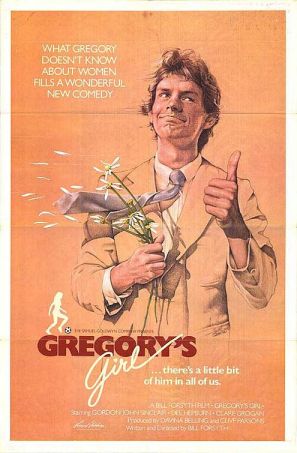
Written and Directed by Bill Forsyth
Starring John Gordon Sinclair, Dee Hepburn, Clare Grogan, Allison Forster, Robert Buchanan
Did you ever flip through the channels and stumble on a movie that just makes your night? Monday November 18th brought about an unexpected surprise when Turner Classic Movies played Bill Forsyth’s coming of age classic Gregory’s Girl in the 8PM timeslot (which is absolutely deserved – the film, produced in Scotland, ranks # 30 on the British Film Institutes list of the top 100 British films, and a clip from the film was included in the opening ceremony video of the London 2012 Olympics). Gregory’s Girl has a special place in my cinematic heart and I remember watching (repeatedly) when when it premiered on cable TV around 1983. We didn’t have a VCR at that time, so it must have been on the schedule at least 20 times over the course of one month. I lost count of how many times I’d seen it back then.
High school student Gregory (played by John Gordon Sinclair) has his complacent life as a high school student and soccer player upended when Dorothy (Dee Hepburn) earns a spot on the boys soccer team. He’s immediately smitten with her, and doesn’t even mind that she’s taken over his position at center forward and he’s been moved to goalie (at the expense of his best friend Alan losing his place on the team). He polishes the ball before handing it to her instead of kicking it to her during the games and practice, and feels the pangs of jealousy (and a little left out from the other side of the pitch) when their teammates and the opposing team each kiss her after she scores her first goal. His attraction to her reaches a fever pitch but he can’t muster the courage to ask her on a date.
At first Gregory’s cavalier attitude on life is charming and brings the audience back to their carefree teenage days (he calls his father “Mike,” arrives at school as he pleases, isn’t phased by losing a soccer game and doesn’t take his soccer coach seriously when told he may be kicked off the team), but it makes you wonder how he’ll take on life as he gets older if he simply lives his life as “just happy to be there.” Despite the toll his unrequited love takes on Gregory emotionally, it’s what he needs to begin taking stock of himself and breaking the mold of complacency. His ten year old sister Madeline is his voice of reason (“If you don’t pay attention to yourself, how do you expect people to pay attention to you?”) as well as his stylist when he finally musters the courage to ask Dorothy on a date.
The tag line of the film says it best: “There’s a little of bit him in all of us.” Forsyth allows the audience to feel Gregory’s ups and downs with all of the angst in between. But what I appreciate the most about Gregory’s Girl is how it doesn’t over dramatize Gregory’s situation or the every day lives of him and his friends. The opening scene may give the mistaken impression that the film will take a sophomoric approach a la Porky’s, but there are no pacts to lose their virginity, no plans for revenge on their teachers, or pranks that will make them legends. Forsyth didn’t need to go down that road. He’s crafted a beloved story and film that only needs to be about a young man trying to get a date with the girl that has his heart.
Compared to American teen films of the 80’s like The Breakfast Club (a great movie in its own right), Gregory’s Girl keeps it simple, and this simplicity keeps the characters and plot grounded in a way that each of us can pick a character and substitute ourselves. Gregory’s Girl succeeds as a film because we can relate to the themes of the awkward teen years, unrequited love, etc. and cheer Gregory on. Forsyth’s style of directing is understated and charming, and he is a master at making a subtle gesture pop out of nowhere and turning it into a funny moment (see his 1983 classic film Local Hero). Several of the scenes that bring out the personalities and idiosyncrasies of the supporting characters may leave the audience guessing as to Forsyth’s motivations for including them, but each of these scenes adds a new layer to the film by showing us what Gregory has around him and how he is shaped by his friends and surroundings.
As a teenager watching Gregory’s Girl, I simply enjoyed the ending without interpreting it too deeply (no spoilers here!). But watching it again in my 40’s, as the closing credits rolled I couldn’t help but wonder how life would have turned out for Gregory, which of his high school friends he would still be in touch with, and how he coped with the loves that would eventually pass in and out of his life (I guess I’ll have to screen Forsyth’s 1999 sequel Gregory’s Two Girls to find out). I looked back almost 25 years since my high school days and reflected on the course my life took, and I’m still fortunate to have two of my close friends from high school in my life. As awkward as my friends and I were back in the 80’s (okay, and maybe through the 90’s too), and with all of the ups and downs of the subsequent years, I think Gregory’s Girl’s normally silent character Charlie summed it up best in a scene where one of Andy’s dreams is crushed: “I think everything’s going to be alright.”
Fante’s Inferno celebrates summer movie-going by revisiting the films of the Summer of 1983.
Krull
Release Date: July 26, 1983
Directed by Peter Yates; Screenplay by Stanford Sherman
Starring: Ken Marshall, Lysette Anthony, Freddie Jones, Alun Armstrong, John Welsh, Liam Neeson, Robbie Coltrane
This is a review that I’ve been looking forward to since I began this retrospective on the films of the Summer of ’83, but not for the reasons you would expect. Most of my reviews involve revisiting films I enjoyed or may have missed in the theaters upon their initial release 30+ years ago to see if they still hold up, but back when Krull first hit theaters on July 26, 1983 I distinctly remember not enjoying it.
By the Summer of 1983, I had been raised on a steady diet of fantasy films like Excalibur and Dragonslayer (both of which still hold up in my book) and Krull didn’t measure up to those films when I first saw it at age 11. But since then, other nostalgic fantasy/sci-fi fans I encounter always talk about how much they loved Krull as kids. Was there something I missed? So I went into this week’s screening with an open mind to see if it indeed was a good film on par with its cinematic peers of the early 80’s.
The film begins with a mountain-like vessel traveling through space and landing on the planet Krull. “The Beast” leads his army of Slayers in conquering the planet. Prince Colwyn (Ken Marshall) and Princess Lyssa (Lysette Anthony) are about to be married, merging their fathers kingdoms in order to fight The Beast’s army, but the ceremony is broken up by the Slayers, their armies killed and Lyssa is kidnapped. Left for dead, Colwyn is healed by Ynyr (Freddie Jones) and retrieves a weapon known as the Glaive before he can attempt to rescue Lyssa. Colwyn recruits a group of escaped convicts on his journey to find the Black Fortress and Princess Lyssa.
The opening credits of the film had me impressed with the level of talent that collaborated on Krull, particularly director Peter Yates and composer James Horner, but the excitement I felt during the opening credits slowly turned into disappointment once the opening line of the film was delivered, and continued as the film progressed. The main source of disappointment for me was with Krull’s script, which is a pastiche of elements from successful fantasy/scifi films that came before it. Prior to Krull, screenwriter Stanford Sherman wrote for the 60’s classic television series Batman and The Man From U.N.C.L.E. and later one of my favorite movies as a kid, Any Which Way You Can starring Clint Eastwood. Unfortunately Krull’s weak story has a ripple effect on the rest of the talent involved with the production beginning with director Peter Yates.
Yates’s drama The Dresser (also released in 1983) is a film I enjoyed particularly for actor Tom Courtenay’s performance in the title role. Going into Krull, I had expected Yates to bring out impressive performances in the cast as he had with Albert Finney and Courtenay in The Dresser, but Sherman gives the characters little in terms of depth, and his uninspiring dialogue gives the actors little to work with. Yates’s use of the camera for the location shots is surprisingly static, and the imposing mountains of Cortina in Italy fall flat with shot compositions containing little action.
I was very happy to see James Horner’s name as the composer of the film. His distinguished career includes the incredible score for Star Trek II: The Wrath of Khan, and his score for 1991’s The Rocketeer is one that I break out on occasion when I need a burst of inspiration. Beginning with the opening credits, his score for Krull is powerful and heroic but unfortunately it keeps that same tone throughout most of the film and there are moments the audience needs a breather.
And so, 30 years later I now realize why I didn’t enjoy Krull back in 1983: in my opinion every line of dialogue, every effect, fight scene, etc. overachieved and subsequently fell flat in the attempt to create an epic fantasy film. The individual parts just didn’t gel, and instead of an epic story Krull plays out as more of an introductory level Dungeons & Dragons module.
Fante’s Inferno celebrates summer movie-going by revisiting the films of the Summer of ’83.
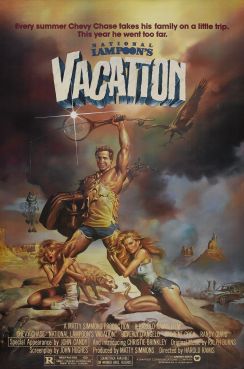
National Lampoon’s Vacation
Release Date: July 29, 1983
Directed by Harold Ramis; Screenplay by John Hughes based on his short story Vacation ’58
Starring: Chevy Chase, Beverly D’Angelo, Anthony Michael Hall, Dana Barron, Imogene Coca, Randy Quaid, Jane Krakowski, John Candy, Christie Brinkley
National Lampoon’s Vacation is one of the films that I looked forward to the most going into this retrospective. Even though I tend to concentrate on fantasy, sci-fi and comic book films I have to include a classic comedy now and then. There are movies that you enjoy, there are movies that you watch many times over, but every so often there’s that one movie that you just seem to empathize with. National Lampoon’s Vacation is one of those movies, and 30 years later it still gets an audience to laugh at its classic scenes and cringe at the memories they bring back of our own summer family vacations. I’m sure most folks over the age of 40 hear a few bars of Lindsay Buckingham’s Holiday Roads on a long distance drive.
Clark Griswold (Chevy Chase) plans a cross country drive from Chicago to California with wife Ellen (Beverly D’Angelo) and teenage kids Rusty and Audrey (Anthony Michael Hall and Dana Barron). He’s convinced himself (but not his family) that a road trip to Wally World (a theme park based on Disney World) will allow them to experience the bonding and quality time they wouldn’t experience by flying. The trip starts on the wrong foot when the Antarctica Blue Sport Wagon they ordered from the car dealership hasn’t arrived and the only car available for them is the frumpy, olive green, wood paneled, eight headlighted Road Queen Family Truckster. Along the way their car is vandalized in St. Louis, they’re stuck with Ellen’s annoying Aunt Edna in the back seat, money runs out and a wrong turn totals their car. But, as the ever patient Ellen says, “With every day there’s new hope.”
The film has great cast led by Chevy Chase and Beverly D’Angelo, but it’s the supporting actors in their cameos that add the extra layers of humor that keep the laughs going: James Keach as the highway patrol officer that goes from threatening to crying in a scene that is both hilarious and just wrong at the same time, John Candy as the Wally World security guard dragged into Clark’s breakdown, and Randy Quaid as Ellen’s ne’er-do-well cousin Eddie that suckers them into driving Aunt Edna from Kansas to Phoenix. It was a treat to see comedic icon Imogene Coca as Aunt Edna in Vacation, but her role provided only a fraction of the comedic gold she brought to TV viewers on Sid Caesar’s Your Show of Shows in the 1950’s and I wish there was a little more written for her. But the scene stealer throughout the film is Clark’s muse of the road played by Christie Brinkley. Is there anything more 80’s than Christie Brinkley and a red Ferrari?
In under two hours, director Harold Ramis is able to pack in urban plight, teenage drug use, underage drinking, animal cruelty, death and a midlife crisis on the Griswold family’s road trip to Wally World. John Hughes’ screenplay was based on his short story Vacation ’58, and soon after his career as a director would explode with 80’s teen classics like Sixteen Candles, The Breakfast Club and Ferris Bueller’s Day Off.
The running gag in the subsequent three Vacation films (European Vacation, Christmas Vacation and Vegas Vacation) was the casting of different actors to play Rusty and Audrey. Anthony Michael Hall and Dana Barron will always be the Rusty and Audrey movie fans will remember, and it would have been fun to see them reprise their roles in European Vacation. Barron was supposed to return as Audrey in the second film, but when Anthony Michael Hall had a conflict starring in Weird Science (also directed by John Hughes), the role of Audrey was re-cast as well.
I wasn’t able to see National Lampoon’s Vacation in the theater back in 1983 due to its R rating (although the film is very tame by today’s standards), but it’s a film I watched on many a Saturday night with my friends and cousins throughout the mid-80’s. Back then we appreciated the humor at face value, but 30 years later we now approach the film with a sense of empathy. Back then, the farthest my family ever drove on our vacations was Montreal, with most of our summer trips taking place in Lake George, NY. Our version of the Road Queen Family Truckster was a midnight blue 1977 Ford Granada with burgundy pleather interior. But as fun as those trips were, without fail, just before putting the car in gear for the drive back home, my father would end the trip with, “Next year, I’m taking a vacation by myself!”
This year, my faithful sidekick and I flew out to Colorado and spent a week and a half driving through Wyoming, South Dakota and Nebraska before flying back to New York. It was my first time in that part of the country, and the most surreal part of the trip was the lack of cars on the road compared to the Northeast. Highlights of our trip included Devils Tower, Custer National Park, Mount Rushmore and the Badlands with a few roadside attractions along the way like the giant Campbell’s Soup Can in Colorado, Dinosaur Park in South Dakota and a giant coffee pot in Wyoming. This was our first real road trip together, and after 30 years of watching Clark Griswold experience everything short of locusts in National Lampoon’s Vacation I couldn’t help but wonder what lay ahead of us on the road. But along the way, a miracle happened: nothing. No broken down car, no bad weather, no short fuses (okay, there was that one time I missed a turn and went nuclear a la Clark in the classic “Can we go home” scene). But it went as smooth as can be and it was one of the best vacations I’ve ever had. Coincidentally, next up is a road trip in Europe…
Overall National Lampoon’s Vacation was as I remembered it, although the pace felt a little slower this time around. And while each scene made me laugh and gain a greater appreciation for the Ramis and Hughes’ style of humor, my older self began to see Clark in a different light. He was no longer just that nerdy dad who’s best intentions tend to make everything worse. At the end of the day, Clark goes through each of those great lengths, much to the chagrin of his family, just to bring them all closer together and have them experience a little bit of fun that they might remember when they’re older. And watching National Lampoon’s Vacation again 30 years later, I simply smiled and looked forward to the day I’d be behind the wheel of my own version of the Family Truckster, family in tow, on a quest for fun.
I had such a great time revisiting the films of the Summer of ’82 last year that I actually experienced withdrawal when I completed the retrospective. Each week I looked forward to screening an old classic from an amazing summer, allowing me to not only revisit each film with a fresh perspective, but also to relive the excitement of many a weekend spent in the local movie theater with a large coke and a pack of Twizzlers.
I wanted to write another summer movie retrospective but wasn’t sure I would be able to find another lineup of films that could compare to what is considered the greatest movie summer for fantasy and sci-fi fans (I can’t think of another summer that had anything close to the number of fantasy and sci-fi films we were blessed with that year). I then decided not to approach a new retrospective in comparison to last year’s on the Summer of ’82, but rather as a nostalgic celebration of summer movie going as a whole.
A glance at the films of the summer of ’83 shows a mix of classics and cult favorites in equal parts sci-fi, thriller and comedy. Unfortunately there were several clunkers in the mix that summer, but overall it’s a lineup of films that I enjoyed in 1983 and continue to enjoy today:
With Memorial Day coming up on Monday 5/27, I would like to thank all veterans and active members of the armed forces for their service and sacrifice.
Every Memorial Day Weekend my ritual is to check the TV listings for the war movies I grew up watching, classic war films I haven’t seen before, and a Band of Brothers marathon. Judging by this weekend’s TV schedule, most of the films I’ll be watching this weekend will be on Turner Classic Movies and streaming video.
Here’s a list of notable movies this weekend (all times listed are EST):
On Turner Classic Movies:
Saturday, May 25: Sergeant York (1941) 10:30 PM
Sunday, May 26: Back to Bataan (1945) 11:00 AM They Were Expendable (1945) 1:00 PM The Green Berets (1968) 3:30 PM Battleground (1949) 8:00 PM
Monday, May 27: The Bridge on the River Kwai (1957) 6:15 AM
The Best Years of OurLives (1946) 5:00 PM
On Netflix: The Battle of Britain (1969) Von Ryan’s Express (1965)
On Amazon Instant Video: The Big Red One (1980) Gallipoli (1981) Sahara (1943) Saving Private Ryan (1998) We Were Soldiers (2002) Band of Brothers (2001) Fixed Bayonets (1950)
Based on the strength of Iron Man 3’s performance last weekend, grossing $170 million domestic and $680 million worldwide, moviegoers and critics that predicted (and in some cases hoped for) the decline of the comic book movie will be disappointed.
For a guy that grew up in an era that didn’t have that many comic book movies released, and with many of those that were released not measuring up to their respective source material, it feels like we’re finally living in a Golden Age of comic book movies and I’m hoping there’s no end in sight.
Sometimes my comic book fandom interfered with my ability to enjoy a comic book film on its own merits. I used to be a staunch believer that a comic book movie had to be as close to the printed source material as possible, but I’ve had a change of perspective over the last couple of years. When the first wave of comic book movies was released, my complaints usually began with the changes made to the superhero costumes. (Wolverine’s yellow costume wasn’t cinematic enough? Then use the brown costume!) But over a time, a personal caveat like Captain America’s costume deviating from the classic Joe Simon/Jack Kirby design was overshadowed by my pure enjoyment of a film. Now I accept the need to balance respect for the source material (particularly the characters and their origins) with the new ideas filmmakers can bring to the franchise. Rather than seeing the film version as a verbatim representation of the comic book, I now go into each film wanting to see it as a new adventure for the characters.
With the latest influx of comic book related films summer has now become my favorite time of year for moviegoing, and this summer’s lineup of releases has me planning my trips to the multiplex.
Here’s a look at the upcoming comic book films for Summer 2013:
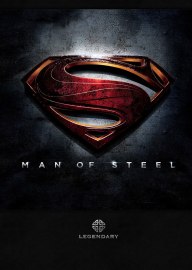
Man of Steel
Release Date: June 14
Directed by Zac Snyder; Screenplay by David Goyer
Starring Henry Cavill (Superman/Clark Kent), Michael Shannon (General Zod), Amy Adams (Lois Lane), Russell Crowe (Jor-El), Kevin Costner (Jonathan Kent), Diane Lane (Martha Kent)
Man of Steel is the summer 2013 film I was looking forward to the most. Back in ’06 the trailer for Superman Returns, complete with a voice over by Marlon Brando from 1978’s Superman: The Movie, made me think that Bryan Singer had taken the first step in reigniting the Superman franchise. Unfortunately the trailer was better than the film, which was little more than a re-hashing of Lex Luthor’s scheme from Richard Donner’s Superman. This time around, everything about the trailer for Man of Steel has me wanting to see this film. While it is a reboot, it has elements from both Superman: The Movie (the origin story) and Superman II (General Zod). The tone is a little darker than I expected but the cast, from Russell Crowe as Jor-El, Kevin Costner as Jonathan Kent and Michael Shannon as General Zod, looks fantastic. Christopher Reeve instinctively comes to mind when I think of the role of Clark Kent/Superman, but I’m looking forward to seeing Henry Cavill’s take on Superman/Clark Kent.
Red 2
Release Date: July 19
Directed by Dean Parisot; Written by Jon Hoeber and Erich Hoeber; Based on the comic book by Warren Ellis and Cully Hamner
Starring Bruce Willis, John Malkovich, Helen Mirren, Mary Louise Parker, Anthony Hopkins, Catherine Zeta-Jones
I hadn’t read Warren Ellis’ and Cully Hamner’s comic book mini-series prior to seeing Red in 2010. The film wasn’t on my radar at the time and I rented it because I thought it would be a fun movie. It ended up as one of my favorite films that year, and Red 2 is one of the films I’m looking forward to the most this summer. Willis, Malkovich and Helen Mirren played well against each other in the first action comedy, and from the looks of the trailer Red 2 is cranking up the firepower with Catherine Zeta-Jones and Byung-hun Lee.
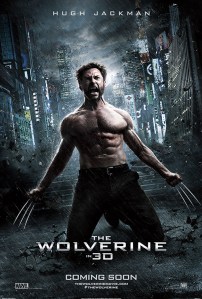
The Wolverine
Release Date: July 26
Directed by James Mangold; Screenplay by Mark Bomback
Starring Hugh Jackman (Logan/Wolverine), Will Yun Lee (Silver Samurai), Svetlana Khodchenkova (Viper), Hiroyuki Sanada (Shingen Yashida), Tao Okamoto (Mariko Yashida)
Wolverine. Japan. Silver Samurai. ‘Nuff said. Watching the trailer for The Wolverine brought me back to the early 80’s and Marvel Comics’ four-part Wolverine mini-series by Chris Claremont, Frank Miller and Joe Rubinstein and Uncanny X-Men #172 and #173 by Claremont, Paul Smith and Bob Wiacek. Silver Samurai is one of the more under-utilized villains of the Marvel Universe in my opinion and his appearance vs. Wolverine in Uncanny X-Men 173 (September 1983) is one of my favorite hero/villain match ups of the 80’s.
Kick-Ass 2
Release Date: August 16
Written and directed by Jeff Wadlow; Starring Aaron Tayl0r-Johnson, Chloe Grace Moretz, Jonathan Mintz-Plasse, and Jim Carrey
August’s Kick-Ass 2 brings back Mark Millar and John Romita Jr.’s teen heroes. Like Red, the first Kick-Ass was another unexpected surprise for me when it was released in 2010. Red Mist (Mintz-Plasse) is back for revenge as The MotherF***er, and Jim Carrey’s Col. Stars and Stripes joins Kick-Ass and Hit Girl in this adrenaline fueled sequel.
This looks like a good summer for comic book films with a good balance between superheroes and action comedy, but it’s only a primer for 2014 and the upcoming releases of The Amazing Spider-Man 2 and X-Men: Days of Future Past. Luckily the release of Thor: The Dark World on November 8th will hold us over until then.
Directed by Terry Gilliam; Written by Terry Gilliam and Michael Palin
Starring: Craig Warnock (Kevin), David Rappaport (Randall), Jack Purvis (Wally), David Warner (Evil), John Cleese (Robin Hood), Ian Holm (Napoleon), Michael Palin (Vincent), Sean Connery (Agamemnon), Ralph Richardson (The Supreme Being), Shelley Duvall (Pansy), Peter Vaughan (Winston), Katherine Helmond (Mrs. Ogre)
Anyone who knows me knows that Terry Gilliam is one of my favorite directors, with several of his films on my list of all time favorites, particularly Monty Python and the Holy Grail (co-directed with Terry Jones), The Fisher King and of course Brazil. But another one of my personal favorites is his 1981 fantasy film Time Bandits.
By 1981 my brother and I had watched every episode of Monty Python’s Flying Circus and were familiar with Gilliam’s animation on the show, but Time Bandits was my first introduction to Gilliam as a feature filmmaker (it would be several years before I would see Monty Python and the Holy Grail and Jabberwocky for the first time).
We caught Time Bandits at our local movie theater a week or two after it was released, and I don’t think there were more than 15 or 20 other people in the audience that Saturday afternoon. I didn’t know too much about the plot going into that first screening, but at the time I was under the mistaken impression that it was a Monty Python film. I was confused as to why John Cleese and Michael Palin only had minor roles, and a little disappointed that the other Pythons weren’t in the film, but that thought quickly disappeared as the story progressed. By the closing credits I wanted to stay in my seat and watch it again.
Terry Gilliam wastes no time getting the story going. Ten year old Kevin (played by Craig Warnock) is woken up in the middle of the night when a knight on horseback charges out of his closet and into a forest that only a moment earlier was his bedroom wall. Cut to the next night: he dozes off waiting for the knight to return, but instead of the charging knight he’s woken up by a group of little men sneaking out of his closet. Before Kevin can figure out what’s going on, the band of thieves is discovered and chased by an ominous figure, ordering them to return “the map.” With Kevin’s help, they push through the bedroom wall into a tunnel leading to a black abyss. Barely ten minutes into Time Bandits, the adventure is in full swing.
The under-sized Time Bandits (Randall, Wally, Fidgit, Strutter, Og and Vermin), international criminals by their own definition, have stolen a map of “time holes” that allow them to travel to different eras in history. According to their leader Randall (played by David Rappaport), they were employed by the Supreme Being to repair the time holes but realized they could have a more lucrative career as time traveling thieves.
I loved every minute of Time Bandits when I was nine, and continued to enjoy it with every subsequent screening over the years. One of the protagonists may be a ten year old, but it’s more than a kid’s film. Gilliam and Palin’s script had wit that adults could appreciate. They packed a lot into the story, and it’s an amazing ride for both kids and adults as the gang of thieves take Kevin on a time traveling journey that includes the Napoleonic era, the Middle Ages and ancient Greece. But each step of the way they’re chased through time by both the Supreme Being (in a cameo by Sir Ralph Richardson), and his nemesis the Evil Genius (played by David Warner).
Every set, costume and camera angle in Time Bandits has Gilliam’s touch of the fantastic. The effects are low tech by today’s standards, but that adds to the charm of this film.
The cast is as strong as any in Gilliam’s films, highlighted by Ian Holm (Napoleon) and Katherine Helmond (Mrs. Ogre), two favorites of Gilliam that would have significant roles several years later in his critically acclaimed Brazil. But David Warner, Ralph Richardson and Sean Connery (King Agamemnon) take it to a higher level. The cast is clearly shown on the movie poster, but each introduction of their characters leads to unexpected turn in the story. This could easily have been a kid’s movie, but the film’s humor and cast of incredible actors (that didn’t take the story for granted) elevate Time Bandits to a fantasy film that’s still fun to watch over thirty years later.







 Fante's Inferno