Tag Archives: Cinema

Grand Central Terminal on Film

February 2, 2013 marked the 100th anniversary of one of New York City’s architectural treasures, Grand Central Terminal.

In my opinion, it’s the most  beautiful structure in New York City, and even after ten years of living here I’m still in awe each time I walk through this iconic station.  At one point after I moved to Manhattan I reverse commuted from Grand Central Terminal to Connecticut every day for four years, and the highlight of each day was taking that first step back into the Main Concourse after a long day at work.

I first started taking the train into Grand Central from the suburbs back in the early 90’s.  It was grungier back then, and after several years of cleaning and maintenance the station was returned to its pristine former glory in 1998.  In honor of that rebirth, the MTA provided a set of commemorative post cards on each seat of each train that departed from the terminal that day.  I still have mine.

One of my favorite memories of GCT was during the 1994 World Cup when the MTA set up a large screen TV in the Main Concourse.  Keep in mind, there are no seats in the Main Concourse, so everyone watching was simply standing near the TV as they waited to board their trains.  I forget which teams were playing that first round game, but the crowd gathered around the TV was enjoying the game and showing emotion as the teams battled it out.  And then out of nowhere some schlubby guy, completely clueless, walks up to the TV and changes the channel!  A riot almost broke out and he’s lucky he got out of there alive!

Grand Central Terminal is incredibly cinematic, and I’m a sucker for a movie that’s shot in that station. IMDB lists about sixty films that have been shot in Grand Central, but I have to think that there have been more.  Some of my favorites over time include The Freshman, Carlito’s Way, Midnight Run, Seconds, and Amateur.  However when I look back at some of these films, the first thing that crosses my mind is how under-utilized Grand Central Terminal was in most of them, particularly one of my favorite indie films, Hal Hartley’s Amateur.  But then I have to remind myself that I’m biased by the fact I walk through Grand Central Terminal a couple of times a week and still can’t get enough of it.  And while there’s an incredible amount of beauty in every corner, stairway and path in the station, too much of it just for the sake of showing it on film can disrupt the flow of a scene.  But when done right, just one shot from the right angle of the Main Concourse is enough for someone to remember a scene shot in GCT.

There are three films in particular that stand out the most in my mind for their directors’ use of Grand Central Terminal.  These are the films I’m reminded of every time I walk through Grand Central.

North By Northwest (1959)

North By Northwest Movie Poster

Alfred Hitchcock’s North By Northwest is a great example of how a director can utilize Grand Central Terminal to give the audience the experience of the Main Concourse at rush hour.  Cary Grant’s walk from a phone booth on the East end of the Main Concourse, past the information desk, and to the ticket booth on the Vanderbilt Avenue side captures what thousands of people go through on a daily basis.  This was the second film Hitchcock shot in Grand Central Terminal, the first was 1945’s Spellbound with Gregory Peck and Ingrid Bergman.

Superman: The Movie (1978)

Superman The Movie - Poster

If you’ve been reading my blog for awhile now, you would know that Superman: The Movie is one of my favorite films of all time and the comic book movie that I measure all others against.  In the film, New York City was Metropolis, and Lex Luthor’s underground hideout was built on a soundstage, but several sequences were actually shot in Grand Central Terminal.  One of the shots of the Main Concourse (with the giant Kodak Colorama photo) may ahve actually been my first introduction to Grand Central Terminal, and I always enjoy seeing what GCT (and New York City) looked like back when Superman: The Movie was shot during the summer of 1977.

The Fisher King (1991)
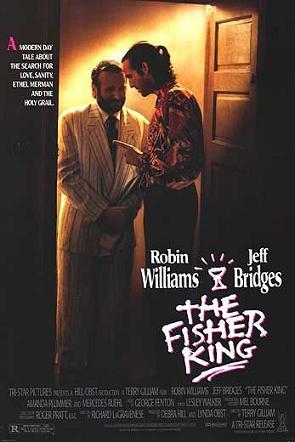
The Fisher King Movie Poster

I’m a huge Terry Gilliam fan, and The Fisher King is my favorite of his films.  It was released in 1991, and this was the Grand Central Terminal that I walked into to the first time I took a Metro North Train in from the suburbs.  Gilliam’s amazing sequence in the Main Concourse as Parry (Robin Williams) follows Lydia (Amanda Plummer) as hundreds of commuters break into a waltz is in my opinion the greatest depiction of Grand Central Terminal on film.  Ever.  That scene changed how I saw Grand Central Terminal, and I still think of that sequence every time I walk past the information booth in the Main Concourse and wonder how Gilliam and cinematographer Roger Pratt were able to get the light to reflect off of the clock in that amazing scene.

Tagged , , , , , , , , , , , , , , , , , , , , , , ,

Football on Film: North Dallas Forty (1979)

In honor of Super Bowl Week, Fante’s Inferno is highlighting the sport of professional football on film:

North Dallas Forty

North Dallas Forty Movie Poster

Release Date: August 3, 1979

Directed by Ted Kotcheff; Written by Frank Yablans & Ted Kotcheff and Peter Gent, based on the novel North Dallas Forty by Peter Gent

Starring: Nick Nolte, Mack Davis, G.D. Spradlin, Charles Durning, Bo Svenson, John Matuszak, Dabney Coleman, Dayle Haddon

North Dallas Forty is the football movie I measure all others up against.  That’s a big statement considering the classic football films that have been released over the last forty years: Brian’s Song, The Longest Yard, Remember the Titans and Paper Lion just to name a few.

I’d seen North Dallas Forty several times from my childhood through my teenage years and always enjoyed it, but always at face value as a good film with football as a backdrop.  But as I got older I developed a greater appreciation for it because of how much professional football has changed since then.  Watching it again this week, North Dallas Forty resonates with me on a completely different level now.  It reminded me of what professional players of the 60’s and 70’s went through to play the game on Sunday, warts and all, and gave me a greater sense of the physical toll the game took on their bodies while earning a fraction of the money today’s players make.

Writer Peter Gent took his experiences was a wide receiver for the Dallas Cowboys in the 60’s and wrote the novel that would become the film.  The North Dallas Bulls football team in the book and film is loosely based on the Cowboys, with characteristics of that NFL team represented by the hyper-professional atmosphere, the team’s over reliance on a computer to gauge performance (and even attitude), and the Tom Landry-esque hat worn by the stern, icy head coach B.A. Strothers (played by G.D. Spradlin).

The movie begin’s with Bulls wide receiver Phil Elliot (Nick Nolte) waking up bloody and sore from the previous night’s game, each ache and pain represented by flashbacks to the hits that caused them the night before.  He gingerly gets out of bed and limps to his kitchen, his ankles still taped up, to start the day with a painkiller and a beer.  He limps like an old man throughout the film, except when he’s on the field.  His routes are precise, his hands the best in the league, and his bum knee numb from the needle.

Elliot’s partner in crime is North Dallas quarterback Seth Maxwell (played by Mac Davis).  They’re two players on the wrong side of 30 doing whatever it takes to make it another week.  But despite their cohesion on the field and their antics off of it, their differences become more evident as the film progresses: Elliot sacrifices for the game while Maxwell games the system.

Director Ted Kotcheff (The Apprenticeship of Duddy Kravitz, Fun with Dick and Jane, First Blood) does a good job balancing  the on and off the field storylines.  On one level you’re looking at this team of characters as they enjoy the lifestyle the game affords them, fueled by alcohol, drugs and women.  On another level you get a peek behind the curtain to see the pressure they’re under to perform and the lengths they’ll go to keep their spot on the roster.

One of the harder hitting scenes in the film occurs as the Bulls watch the game film from their last win.  Despite winning the game, Coach Strothers and his Maalox swilling assistant coach Johnson (Charles Durning) pick apart each play looking for flaws.  Offensive tackle Stallings (played by Jim Boeke, Peter Gent’s real life teammate on the Cowboys in the 60’s) is called out by Strothers for losing his footing and tripping on a play during a crucial drive.  The next scene shows his locker being cleared out by the equipment manager.  This is the moment you realize that even with success, no one is safe.  The film’s score even lends a sense of the sinister, highlighting  B.A.’s mind games, Elliot’s feeling of being watched, the fear each player has of losing his job, and the team doctor’s complicity in allowing them to harm their bodies even more just to play another game.

One of my pet peeves when watching sports films is how unrealistic the extras sitting in the stands can look during the game scenes, particularly in the reaction shots.  Having worked as an extra in a couple of sports films myself, when this is done wrong it can cheapen the look of the film (I may write a blog post on one of my experiences).  But Kotcheff made what I thought was an effective choice as a director by blacking out the stands in shadow during the game scenes.  You become so drawn to the emotion and action of the game that you barely notice that there are no fans visible.

The film has a strong cast down to the supporting characters.  You feel Phil Elliot’s physical pain in Nick Nolte’s performance.  Mac Davis’ nails the part of Maxwell in his first film role, and the confidence he infuses in his character makes you think he would really be able to lead an offense downfield with time running out.  Other notable performances include Bo Svenson as offensive lineman Joe Bob Priddy, the big ox that can snap at any moment, and Oakland Raider great John Matuszak as offensive lineman as O.G. Shaddock.  This was also Matuszak’s first movie, highlighted by a passionate monologue after their division championship game with Chicago.  In his 1987 autobiography Cruisin’ with the Tooz, Matuszak wrote about his audition for this role.  He had never acted before and didn’t really know what to do when he arrived for the audition.  Another actor also auditioning for the role of Shaddock told Matuszak to ask the casting director to let him give a cold reading, thinking that Matuszak’s lack of experience would show.  Matuszak nailed the audition.

North Dallas Forty is more than just a football film.  It’s a film about the pain and sacrifice players make for the game and for the team, only to find out that loyalty doesn’t always go both ways.  As Elliot says towards the end of the film, “The only thing that’s real in that game is me.  And that’s enough.”

Tagged , , , , , , , , , , , , ,

Filmed in Italy: Venice, Summertime and a Last Crusade

In the months leading up to our recent trip to Italy, which included Bologna, Verona, Milan and Lake Como, I couldn’t stop thinking of our upcoming visit to the jewel in Italy’s crown: Venice.

This was my first trip back to Venice since 1979.  I was seven and it was only a day trip, but the city made such an impression on me that even the smallest details of that summer day stayed with me throughout my life.  I had dreamed of going back ever since and I finally had the opportunity this past September.  My faithful sidekick and I took the morning train from Bologna, and the moment we stepped out of the stazione onto the Grand Canal I was struck by the timeless beauty of this city and knew this trip would be worth the wait.

Venice Grand Canal
Copyright Fabrizio Fante

We had a long list of things to see in Venice, including the Doge’s Palace, St. Mark’s and the islands of Murano and Burano, but our favorite moments involved getting lost in the twists and turns of the beautiful cacophony of Venice’s streets and stopping in the cafes for espressos and pastries, armed with my trusty Pentax K-1000 35mm camera.

We packed a lot into our three days there, but on this leg of our Italy trip I had two places on my own personal list to visit.  I’ve seen many films shot in Venice, including The Talented Mr. Ripley, Bread and TulipsEveryone Says I Love You and The Tourist (please don’t judge me).  But David Lean’s Summertime (starring Katharine Hepburn and Rossano Brazzi) and Steven Spielberg’s Indiana Jones and the Last Crusade are the first two films that come to mind when I think of Venice and for good reason.  Each movie makes full use of the city, bringing out its beauty, mystery and architecture to the point where Venice is a character in each film.  My cinematic mission on this trip was to find two specific movie locations: Rossano Brazzi’s little antique shop in Summertime and the library from Last Crusade.

David Lean’s Summertime was based on Arthur Laurents’ play The Time of the Cuckoo and starred Katharine Hepburn as Jane Hudson, a lonely American secretary from Ohio on her dream vacation to Venice.  Jane explores the streets and canals with her 16mm movie camera and no one to share the moment with except for ten year old local boy Mauro (played by Gaetano Auterio) until she is charmed and seduced by local antique dealer Renato de Rossi, played by the cooler than cool Rossano Brazzi.

Venice Grand Canal
Copyright Fabrizio Fante

Lean shot Summertime in glorious Technicolor on location in Venice in 1954.  There are many memorable shots in the film: Hepburn’s first glimpse of St. Mark’s Square and her first view of the Grand Canal as she walked out of the train station are two  that come to mind.  I always thought the line “Don’t change a thing” by the character Edith McIlhenny as she saw the canal for the first time was a bit hokey, but having seen this view myself (picture above) I can now empathize.  Every alley, bridge, and canal was used to the fullest on the screen, but the location I had to find on the island of Venice was Renato’s antique shop.

Renato’s shop was one of the central locations in the story and the location of the most memorable scene in the film: Jane’s mortifying, accidental plunge into the canal outside of Renato’s shop.  As much as that scene was written for a laugh, the audience can’t help but cringe for Joan as she steps out of the filthy water of the canal, completely soaked and with all eyes on her by the locals and tourists.  Her already fragile self esteem has taken a hit.  One of the stories around this scene was that Hepburn’s lifelong eye problem was caused by this plunge into the canal, but Kevin Brownlow’s David Lean: A Biography points out that the crew set up safeguards for Hepburn to have limited contact with the filth at the bottom of the canal, and that Hepburn had numerous swims in the Grand Canal during the nights they weren’t shooting.

It had been awhile since I’d seen Summertime and I couldn’t remember if there was a specific reference to the neighborhood where the antique shop was located.  We had one morning left in Venice and I wanted to avoid a needle in a haystack situation considering how easy it is to get lost in the side streets.  So we decided to forsake our search for the shop and instead visit Last Crusade’s library location at the church of San Barnaba di Venezia.

As a kid I loved Raiders of the Lost Ark, and after watching this film Indiana Jones quickly became one of my all time favorite film characters (up there coincidentally with Han Solo).  But there’s something about Last Crusade that gets me to watch it more frequently than Raiders.  Part of it is the Grail quest, an even bigger part of it is Harrison Ford’s incredible dynamic with Sean Connery, but the last piece of the puzzle is…you guessed it…Venice.

All of the exterior scenes shot on location in Venice were filmed in one day on August 8, 1988.  Spielberg and the crew had full use of the Grand Canal for six straight hours.  It’s amazing to think of how much they were able to accomplish in such a short amount of time.  The exterior of San Barnaba was featured in the scene in which Indy, Marcus, and Elsa discover the entrance to an underground passage leading to the tomb of one of the knights sworn to protect the secret of the Holy Grail.  It was one of many great sequences in the film, leading to a great chase scene on boat through the Grand Canal, but in that library scene only the exterior of San Barnaba was used.  The rest of the scene taking place in the interior of the library was shot on a soundstage.  Nevertheless, it was a location in one of my favorite films and I wanted a picture of it.

And so on our last morning in Venice as my faithful sidekick and I sipped our morning cappuccinos, we located the church of San Barnaba on our city map and set out to see it firsthand.  Funny enough, once I saw the white exterior I instantly recognized it as a church we had passed by at least twice before when we were lost.  So I found a nice angle for a picture and snapped a couple of shots with my Pentax.  But something to the side of the frame caught my eye in the viewfinder…

As I faced San Barnaba, I noticed a small bridge to the left.  Nothing too ornate, but what caught my eye about it was the steps leading to the church side of the small canal had descended in front of a small, inconspicuous shop.  It reminded me of something.

I remembered how in one scene in Summertime Katharine Hepburn had descended the steps of a small bridge as she walked to the door of Renato’s antique shop.  And outside of the shop, on the edge of a canal was a set of steps leading down into the water, or in the case of Joan coming up from her plunge in the canal, out of the water.  The proximity of the bridge, shop and steps got me wondering, so I walked in.

To the right: St. Barnaba from Indiana Jones and the Last Crusade
To the left: The shop from David Lean’s Summertime
Copyright Fabrizio Fante

There were no antiques, it was a children’s shop, but on the counter was a picture of Katharine Hepburn and Rossano Brazzi in the shop window with the same exact view looking out toward the canal.  I asked the shop owner in my rusty Italian if this was indeed the shop in Summertime.  She smiled, said it was the shop from the film, and offered to take a picture of us in the window like Hepburn and Brazzi (I was Brazzi).

“Do many people ask you to take this picture?”  I asked.

She rolled her eyes with a smile and answered, “You have no idea how many times a day I take this picture for the visitors.”

And so my cinematic mission was complete.  Grazie Venezia!

Indiana Jones and the Last Crusade can be found on DVD and Blu-Ray, and Kevin Brownlow’s David Lean: A Biography can be found in print and Kindle format on Amazon.  As an Amazon associate, I earn from qualifying purchases.  Thank you for your support!

Tagged , , , , , , , , , , ,

The Summer of ’82: E.T.: The Extra-Terrestrial

Fante’s Inferno revisits the films of the Summer of 1982, considered the greatest movie summer for fantasy and sci-fi fans.

E.T.: The Extra-Terrestrial

Release date: June 11, 1982

Directed by Steven Spielberg; Screenplay by Melissa Mathison

Starring: Henry Thomas, Drew Barrymore, Dee Wallace, Peter Coyote, Robert McNaughton

See the original trailer here.

How is it Labor Day already?  Seems like just last week I was writing my first post on the Summer of ’82 and screening Conan the Barbarian!

I’ve been putting off writing this post for as long as possible this past week.  Over the last two months I’ve had such a great time revisiting the films of the Summer of ’82, that (like summer vacation) I didn’t want it to end.  This retrospective has brought me back to one of the most memorable summers of my youth, almost as if I’ve been living the summers of 1982 and 2012 in parallel.

Looking back at the lineup of movie releases that summer was mind boggling.  It’s only fitting that I wrap up my personal journey through the films of the Summer of ’82 with that summer’s mega-blockbuster: Steven Spielberg’s E.T.: The Extra-Terrestrial. 

E.T. was one of the only films I had to stand in line halfway down the block for during its opening weekend.  The buzz in the lobby really made it feel like an event, and if I remember correctly our local theater booked E.T. into two of its four screens, a rarity back then.  The crowd was an mix of kids, teenagers and adults, which was a testament to how Steven Spielberg was able to make E.T. accessible across generations.  A couple of posts back I compared Star Trek II: The Wrath of Khan to the cleanup hitter on a baseball team.  Even though Khan is my favorite film from the Summer of ’82, Spielberg’s record breaking E.T.: The Extra-Terrestrial would be the League MVP based on its phenomenal box office  that year ($359 million in North America, $619 million worldwide).

E.T. is one of those movies that had each element hit the right note to create a flawless film.  Screenwriter Melissa Mathison used elements from Spielberg’s unproduced project Night Skies in her screenplay, and wove together the themes of isolation, loneliness and friendship to create a story filled with characters that are more than just caricatures to support the cute little alien.  Spielberg brought out fantastic performances in the young cast led by Henry Thomas as Elliot and supported by Robert MacNaughton and Drew Barrymore as his siblings Michael and Gertie.  And who could forget John Williams’ incredible and inspiring score?

As much as I enjoyed E.T. when it was originally released, I thought that I was a bit too old for it at the time, which is strange when you consider Henry Thomas was also 10 when he played Elliot.  At that young age I was on a steady diet of science fiction films like 2001: A Space Odyssey, Alien, and Outland.  I chuckled when I watched the scene of Elliot’s brother and his friends playing a game that looked similar to Dungeons & Dragons at the beginning of the film.  My first thought was “Looks like those guys are playing Basic D&D.  Hmmmph, we play Advanced D&D!”

When E.T. was re-released in theaters in 2002, several of my friends who were also in their 30’s at that time had planned on seeing it as a group after work one night.  I thought about joining them, but at the time I had a feeling that I wouldn’t have been able to enjoy the film with the same enthusiasm at age 30.  Even though I now disagree with that original sentiment, I’m glad I didn’t watch E.T. ten years ago because it may have tainted my opinion of it during this retrospective on the Summer of ’82.  And so at age 40 I watched E.T. in the spirit of my ten year old self and enjoyed it even more.

Tagged , , , , , , , , , , , , , ,

The Summer of ’82: Tron

Fante’s Inferno revisits the films of the Summer of 1982, considered the greatest movie summer for fantasy and sci-fi fans.

Tron

Release Date: July 9, 1982

Written and Directed by Steven Lisberger

Starring: Jeff Bridges, David Warner, Bruce Boxleitner, Cindy Morgan

See the trailer here.

During the summer of 1982 I  spent more than a few days at the local movie theater and comic shop, but my favorite hangout in my hometown was the local video arcade.  Prior to the video game boom, the game room at Cook’s restaurant was filled with the sounds of pinball machines, skee ball and air hockey, but by 1982 it was in full swing with video games ranging from the classic Pac Man, Space Invaders and Missile Command to Battle Zone, Punch Out and my game of choice: Galaga.  They were great games and still are.  I don’t even want to attempt to estimate how many quarters I plunked into those machines from 1979 to 1986.  On a recent trip to Cape Cod I was in a restaurant that had Galaga and I couldn’t resist playing a game or two, although nowadays when I see a pinball machine or video game with 50 cents or $1 per play my first reaction is “That is an outrage!”

Back in the Summer of ’82 I remember most of my friends going on and on about how cool Tron was.  The special effects made it look like the type of video game we were hoping to see in our arcade sooner rather than later.  You would think that a film like Tron would have had me camping out for the first screening, but looking back I don’t think I saw it in the theater.  I don’t think I saw it more than once on cable TV either.  How the heck did that happen?

I was starting to think I had missed out on a rite of passage and had to make up for lost time.  My 42″ TV is pretty big for my apartment, but watching the first scenes that took place within the mainframe made me wish I had experienced watching Tron on the big screen at my local cinema back in 1982.  The production design is simple even by 1982’s standards, but it reminds me of the vector graphics of several video games I played back in the day, particularly Battle Zone  and the Star Wars arcade gameTron’s beauty is in this simplicity, and it’s accented perfectly by the colors and lighting effects of the costumes designed by none other than the great Jean Giraud (aka Moebius).

Jeff Bridges (The Big Lebowski, The Fabulous Baker Boys, Iron Man) is always a pleasure to watch on film and David Warner (Time After Time, Time Bandits, Masada) is perfectly cast in Tron as his nemesis Sark.  Warner’s performance, along with his performances as Jack the Ripper in Time After Time, Evil in Time Bandits, and Chancellor Gorkon in Star Trek VI: The Undiscovered Countrymake him in my opinion the consummate movie villain.

I love the concept of Jeff Bridges’ character Kevin Flynn experiencing the world within the mainframe system, but when I watched Tron again this week my one caveat was that even my ten year old self would have felt the circumstances leading to Flynn’s transportation into the inner world of the mainframe might have been a bit too simplistic.  And like a few other films from the Summer of ’82 the pace was a little too slow for me.

Steven Lisberger created an amazing hybrid of fantasy and tech that was said to have been influenced by his first exposure to Pong in the mid-70’s.  It’s funny how Pong, the simplest video game that is now used as a punch line when discussing technological advances, led to one of the boldest cinematic visions of the 80’s.  The video games of the 80’s may not have had the graphics of Tron, but Tron gave video games something to aspire to.  While it was a modest critical and box office success (it only grossed $33 million against its $17 million dollar budget), Lisberger should be praised for pushing the envelope to achieve a look that moviegoers still vividly remember 30 years later.

Tagged , , , , , , , , , , , ,

The Summer of ’82: Fast Times at Ridgemont High

Fante’s Inferno revisits the Summer of 1982, considered the greatest movie summer for fantasy and sci-fi fans.

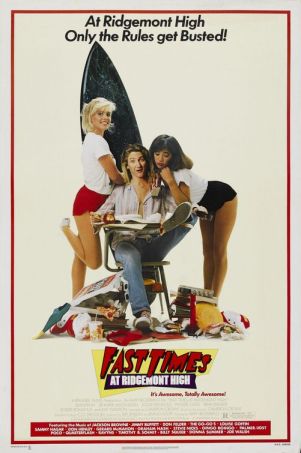
Fast Times at Ridgemont High

Release Date: August 13, 1982

Directed by Amy Heckerling; Screenplay by Cameron Crowe

Starring: Sean Penn, Phoebe Cates, Jennifer Jason Leigh, Forest Whitaker, Judge Reinhold, Brian Backer, Robert Romanus, Ray Walston

How could I have forgotten that Fast Times At Ridgemont High was released thirty years ago this summer?

Since I started this retrospective on the Summer of ’82, I’ve concentrated entirely on fantasy and sci-fi films and completely (and inadvertently) ignored one of the most memorable films of the 80’s.  I’m sure none of you will fault me for including a film that doesn’t fit into the fantasy or sci-fi genre because it’s as enjoyable as any other film during the Summer of ’82.  I was obviously too young to see Fast Times in the theater when it was released, although I’m sure there was a failed attempt or two to sneak in.  However, what I missed in the theater in 1982 I gladly watched many times over on cable TV.  Going into my freshman year of high school in 1986, I had seen Fast Times at Ridgemont High at least ten times.

This is a great film and it was a launching pad for many talented people.  Sean Penn’s Jeff Spicoli was the poster child for stoner-dom.  Judge Reinhold reminds us of our first job, our first heartbreak, and the car that got us there.  Ray Walston was that one teacher that we couldn’t stand.  Phoebe Cates gave us one of the most iconic shots of 80’s cinema.

Director Amy Heckerling took Cameron Crowe’s script, a young, but very talented cast, and a cool soundtrack and wove Fast Times at Ridgemont High into THE definitive high school film for those of us who grew up in the 80s.  Contemporary high school films don’t have the depth of Fast Times, and they sure as hell don’t have the caliber of actors.  Consider the number of awards earned by nine members of the cast and screenwriter Cameron Crowe over the subsequent course of their careers:

13 Academy Award nominations; 7 wins
18 Golden Globe nominations; 4 wins
13 Emmy Award Nominations; 4 wins
1 Grammy Award

Of all of the films I’ve re-watched from the Summer of ’82, this one made me the most nostalgic.  It came out a few years before I started high school, but it reminded me of the days of hanging out at the video arcade (yes, we actually left the house to play video games), driving around in a friend’s beat up car, and enduring four years that most of us probably wouldn’t want to repeat.  There were quite a few teachers from high school that I wouldn’t want to cross paths with again.  But one thing that surprised me the most when I watched Fast Times at Ridgemont High again this week is the fact that I started to empathize with  Mr. Hand (played perfectly by Ray Walston).  Wow, I must be getting old.

Tagged , , , , , , , , , , , , ,

The Summer of ’82: The Secret of NIMH

Fante’s Inferno revisits the Summer of 1982, considered to be the greatest movie summer for fantasy and sci-fi fans.

The Secret of NIMH

Release Date: 7/2/82

Directed by Don Bluth; Written by Don Bluth, John Pomeroy, Gary Goldman and Will Finn; based on the novel Mrs. Frisby and the Rats of NIMH by Robert C. O’Brien

Starring: Elizabeth Hartman, Derek Jacobi, Arthur Malet, Dom DeLuise, Peter Strauss, Paul Shenar, Aldo Ray, John Carradine

See the trailer here.

The Secret of NIMH is one of my favorite animated films of all time along with Watership Down, Fire and Ice, and Heavy Metal.  One thing that always concerns me when I revisit an animated feature from the 70’s or 80’s is the possibility of losing the excitement I had for the film when compared to present day animation.  Luckily this didn’t happen when I watched NIMH earlier this week.

As amazing as 3D animation looks, I still have more of an appreciation for the technique of 2D, hand drawn animation.  I still consider The Secret of NIMH to be one of the best examples of traditional animation in the last 50 years, and I say this knowing that many Disney fans will disagree with me.  One thing I forgot over the years was how striking the background paintings were.  Each of them stood on their own as more than just background, they were works of art that set the mood and tone of the film.

One game I like to play when I research a film on iMDb is a “where are they now” of the cast.  Of the films I’ve revisited so far in my Summer of ’82 series of posts, the cast of The Secret of NIMH surprised me the most.  I easily remembered Derek Jacobi as Nicodemus and Dom DeLuise as Jeremy the crow, but I was surprised to find the voice of Mrs. Brisby was Elizabeth Hartman, who earned an Oscar nomination for her performance as Sidney Poitier’s blind love interest in the 1965 film A Patch of Blue.  Other surprises were Shannen Doherty and Wil Wheaton as Mrs. Brisby’s children Teresa and Martin, and Peter Strauss as Justin.  Aldo Ray was the voice of Sullivan.  And how about John Carradine as the Great Owl!  Don Bluth and Gary Goldman pulled out all the stops with this film (their first animated feature after they left Disney) and they definitely invested in a great cast.

I was surprised The Secret of NIMH was given a G rating considering many of the darker elements in the film.  I remembered the scene of the rats going through the tests at NIMH as being too much for a child to be able to handle at a young age, but even scenes such as Mrs. Brisby’s meeting with the Great Owl and her first encounter with the rat Brutus might scare the bejeezus out of out of a young child.

Thirty years later, The Secret of NIMH doesn’t only hold up, it reminds me of why I love animation.  The story, characters and especially the animation drew me back in and brought me back to my local theater back in 1982.  All I needed was a large Coke and a 1/2 pound bag of strawberry Twizzlers.

Tagged , , , , , , , , , , , ,

The Summer of ’82: The Thing

Fante’s Inferno revisits the films of the Summer of 1982, considered to be the greatest movie summer for fantasy and sci-fi fans.

The Thing

Directed by John Carpenter; Screenplay by Bill Lancaster based on the story Who Goes There? by John W. Campbell Jr.

Starring: Kurt Russell, Wilford Brimley, Keith David, Donald Moffat, Richard Dysart, T.K. Carter, David Clenn0n, Richard Mazur, Thomas G. Waites, Joel Polis

The trailer can be seen here.

I haven’t seen John Carpenter’s The Thing since the mid 80’s, and I don’t remember it having as big of an impact on me as several of the other films that were released during the Summer of ’82.  Over time I may have dismissed The Thing as an Alien-esque knockoff, but watching it again this weekend I realized how little I remembered about this film and how wrong my initial assessment was.

Back in ’82 I was too young to really appreciate this film as a psychological thriller.  As a ten year old I cared more about the special effects and gore.  This time around I was able to truly appreciate the performances of the entire cast, particularly Wilford Brimley and Donald Moffat.  The scenes of confusion, paranoia, and survival had more of an impact on me as a viewer than the gory sequences.  I thought Kurt Russell was the epitome of badass as Snake Plissken in Escape From New York, and his character of R.J. MacReady in The Thing oozes the same confidence.  Maybe a little too much at times.  Considering the fact that they’re dealing with a shape shifting alien that can easily take over their bodies, he seemed a little too much in control for me to find his character believable today.  Although Keith David did give him strong competition in the badass category when he broke out the flame thrower.

One thing I loved about The Thing was the pace of the film.  The opening shot of alien’s ship in distress as it entered Earth’s atmosphere was quick and effective.  The sequence of the Norwegians chasing a Siberian Huskie along the frozen landscape of Antarctica in an attempt to kill it adds to the sense of mystery.  The introduction of the staff at the American scientific base quickly and effectively sets up their situation in Antarctica (boredom and isolation) without wasting too much time on exposition.  Alien ship crash lands on Earth, dog chased along the frozen landscape, Norwegian gets shot.  What the heck is this group in for?

The gore and special effects were great for the time, but the autopsy scenes creeped me out more than the alien working its way through the members of the camp.  One thing that really surprised me watching it with today’s sensibilities is that these characters were way too comfortable with exposure to germs and blood (MacReady inspecting what could be contaminated clothing without gloves, and Windows simply wiping the blood off of a scalpel before cutting his own finger with it).  These little things actually got me to cringe more than the gory scenes.

Based on the short story Who Goes There? by John W. Campbell Jr. (who is considered the father of modern science fiction) The Thing was the second adaptation of his story on film (the first was The Thing From Another World in 1951).  John Carpenter had been at his A game for years by 1982, but his storytelling reached a whole new level with The Thing.  In my opinion the heightened sense of isolation, paranoia and distrust among the characters makes it hold up better today than Halloween and The Fog.  Bill Lancaster’s screenplay keeps us guessing as we try to figure out who in the group was the next one to be infected by the thing.  At one point I thought to myself that this story could have also worked as a stage play.  Prior to watching it this weekend, I expected a lot more gore and a lot less psychological drama and was pleasantly surprised when the opposite played out.  Each scene makes you wonder when and how the axe will fall on these guys.  I enjoyed it back then, but watching it again 30 years later turned out to be more enjoyable than I expected.

Tagged , , , , , , , , , , , , , ,

The Summer of ’82: The Road Warrior

Fante’s Inferno revisits the Summer of 1982, considered to be the greatest movie summer for fantasy and sci-fi fans.

The Road Warrior

The Road Warrior
Warner Bros. Pictures

Release Date: 5/21/82

Directed by George Miller; Screenplay by Terry Hayes and George Miller

Starring Mel Gibson, Bruce Spence, Kjell Nilsson, Vernon Wells

The Road Warrior was originally released in Australia in 1981, but made its U.S. debut in May of 1982.  Director George Miller (Mad Max, Happy Feet) did an amazing job with this film.  When I watched it again this week, the driving sequences still got my adrenaline going, especially the unforgettable and iconic shot of Wez (played by Vernon Wells) climbing over the hood of Max’s rig in the film’s key action sequence.  Cinematographer Dean Semler shot The Road Warrior in a 2.35:1 aspect ratio, and his photography makes the deserted red landscape more than just scenery, it’s a character in the film.  My DVD has the standard version as well as widescreen.  To watch this film in pan and scan is a crime.

Australian cinema was making a big impression on me at that time.  In addition to The Road Warrior there were quite a few Australian films that I love from the early 80’s, particularly Gallipoli, The Year of Living Dangerously, and Breaker Morant.  I also remember other lesser known Australian films such as The Odd Angry Shot and The Club playing in heavy rotation on cable TV back then.  In addition to George Miller, my favorite Australian directors are Bruce Beresford (Breaker Morant, Tender Mercies, Driving Miss Daisy) and Peter Weir (Gallipoli, Witness, Master and Commander: The Far Side of the World).  Miller’s directing career has incredible range, from action films (Mad Max, The Road Warrior, Mad Max: Beyond Thunderdome) to dramas (The Witches of Eastwick, Lorenzo’s Oil) to family films (Happy Feet, Happy Feet 2).

I’m looking forward to Mad Max 4: Fury Road (also directed by Miller), although to me it will be strange to see another actor (Tom Hardy, who plays Bane in The Dark Knight Rises) in the role of Mad Max.  There’s no doubt in my mind that it’ll be a high octane ride, but I truly hope that the film keeps the driving sequences as CGI free as possible.

I think The Road Warrior plays just as well now as it did in 1982.  The premise holds up today, the action scenes still pack a punch, and overall it doesn’t feel as dated as other films of the early 80s.  One small distraction was the film’s questionable wardrobe.  Luckily the collapse of civilization occurred after the last major shipment of American football shoulder pads, hockey masks and leather chaps to Australia.  The one thing about this film that makes me feel old is the fact that the actor that plays the Feral Kid (Emil Minty) is my age.  I have to stop looking up this stuff on IMDB…

Tagged , , , , , , , , ,

The Summer of ’82: Conan the Barbarian

Fante’s Inferno is revisiting the summer of 1982, considered to be the greatest movie summer for fantasy and sci-fi fans.

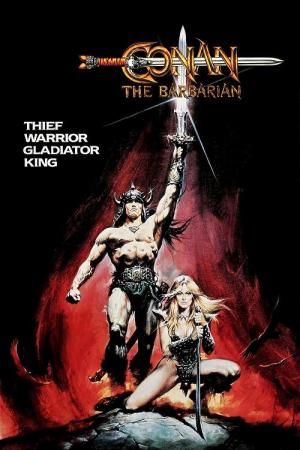
Conan the Barbarian

Conan the Barbarian
Copyright 1982 – Universal Pictures

Release date: 5/14/82

Directed by John Milius; Screenplay by John Milius and Oliver Stone (Based on the works of Robert E. Howard)

Starring: Arnold Schwarzenegger (Conan), James Earl Jones (Thulsa Doom), Sandahl Bergman (Valeria)

Famous quote:  When asked “What is best in life?”  Conan responds: “To crush your enemies, see them driven before you, and to hear the lamentation of the women.”

The film begins with a blacksmith forging a sword…

I always loved that opening sequence.  The art of creating the weapon got me hooked on the story at age 10, and watching it this week at age 40 reminded me why.  At that point in my young life I was feeding myself a steady diet of fantasy books, Dungeons & Dragons, and Frank Frazetta’s artwork.

This isn’t a review, per se.  One thing I can’t bring myself to do with this film, or most others I enjoyed in my youth, is look at them with the jaded snarkiness that most other people would approach the film with in 2012.  I won’t judge the film by the primitive effects by today’s standards, the acting ability of Arnold at that point in his career, or whether or not I outgrew the film/genre as I got older.  For me, it comes down to these points:

1. Does watching it now remind me of why I enjoyed it back then?
2. Does the story still hold up for me?
3. Does the film reinforce what I like about the genre?

And so, how did it hold up for me when I watched it 30 years later?  Much better than I thought.  Although the special effects (or lack of special effects) would come across as dated by today’s standards, I actually enjoyed it more for that reason.  I prefer the old school approach on 35mm over today’s CGI overload.  If done today, the number of Thulsa Doom’s attackers in the opening raid of Conan’s village might ave been multiplied by 100 and the “real” actors might have been filmed against a green screen.  While I appreciate the progress that has been made with CGI (I’m not a luddite), and a filmmaker’s desire to create a landscape with these tools, regardless of how well it’s done it’s still a distraction to me as a viewer (although one CGI film that I thoroughly enjoyed was Sky Captain and the World of Tomorrow).  I will always have an appreciation for the lost art of the matte painting.

If there was anything I would criticize about Conan the Barbarian, it would be the slow pace of the film.  Clocking in at 2 hours and 7 minutes, a half an hour could have been cut just by picking up the pace in many of the scenes.

One thing I didn’t realize was how little dialogue Arnold had throughout the film, unless you count the 87 times he said AAAGHaaghAAAGHaaAGH!!!! when tortured or beaten.

Seeing the final shot of an older, wiser, King Conan on his throne at the end of the film and reading the final lines on the screen reminded me of how I couldn’t wait for the sequel back then.  Two years later my childhood friend Kevin and I saw Conan the Destroyer in the theater.  Even at age 12, the fantasy/D&D fan in me didn’t take the story as seriously as Conan the Barbarian.

This film was like an old Dungeons & Dragons campaign on celluloid.  Two swords up.

Tagged , , , , , , , , ,