Category Archives: Film

The Summer of ’82: Blade Runner

Fante’s Inferno is revisiting the Summer of ’82, considered to be the greatest movie summer for fantasy and sci-fi fans.

Blade Runner

Release date: 6/25/82

Original theatrical trailer here.

Directed by Ridley Scott; Screenplay by Hampton Fancher and David Peoples (based on the novel Do Androids Dream of Electric Sheep by Philip K. Dick)

Starring: Harrison Ford, Rutger Hauer, Sean Young, Brion James, Daryl Hannah, William Sanderson

When I’m asked to name my favorite movie of all time, my first response is “There are too many favorites to narrow down to just one. ”  But when pressed to just try to narrow it down to one film, I would have to go with Blade Runner.

I wasn’t able to see Blade Runner in the theater when it was released 30 years ago this week.  I first caught it on cable TV a couple of years later.  At that time it didn’t have the profound effect it would have on me as I got older, but I absolutely enjoyed it.  When I revisited Blade Runner in my twenties I was struck not only by how the film still held up for me, but also by the fact that I enjoyed it much more with each subsequent viewing.  I was beginning to develop an obsession with it.

In the Spring of 1998 I was taking a certificate program in filmmaking at NYU (one of the most enjoyable moments in my life).  Over twelve weeks of intensive shooting and editing, I struck up friendships with two of my classmates.  One of them, cinematographer Mike P., was (and still is) a huge fan of Blade Runner.   Our conversations reintroduced me to the film.  I bought and watched a VHS copy of the 20th anniversary director’s cut (letterboxed of course!) and my obsession began.

For awhile I was on the fence regarding which version I liked better: the director’s cut or the original theatrical version with the happy ending and Decker’s voice overs.  The director’s cut is definitely a tighter edit, and Harrison Ford’s voice overs in the theatrical version are a distraction now.  Maybe it’s nostalgia, or maybe it’s the fact that I want the film to keep going after the elevator doors close in the director’s cut, but now that I have both versions on DVD I tend to lean more towards the theatrical version.  When the Ziegfeld Theater in Manhattan screened Blade Runner: The Final Cut on 2007, I was hoping it would have included the original theatrical ending.  I grumbled walking out of the theater when it didn’t…

In 1998 American Cinematographer had ranked Blade Runner in the top ten most beautifully shot films of all time.  The write up included a frame of Sean Young smoking a cigarette and an excerpt from the original article in American Cinematographer from 1982.  I ended up buying a copy of that 1982 issue on eBay.  I grossly overpaid, but I needed to read about Jordan Cronenweth’s cinematography.  Then I bought a copy of Future Noir: The Making of Blade Runner which I highly recommend for both fans of Blade Runner and film in general.

What surprised me the most when I revisited Blade Runner were the negative reviews when the film was released.  The story was compelling, the effects were amazing, and each actor brought his or her character to life.  As I got older, in spite of the ruthlessness of the replicants played by Rutger Hauer, Brion James, and Daryl Hannah, I was able to empathize with their plight.  They just wanted to live longer.

There’s no question regarding whether or not Blade Runner holds up 30 years later.  It’s on a different level from the other movies released during the summer of 1982.  This one falls into the category of timeless.  I give it five out of six replicants.

Tagged , , , , , , , ,

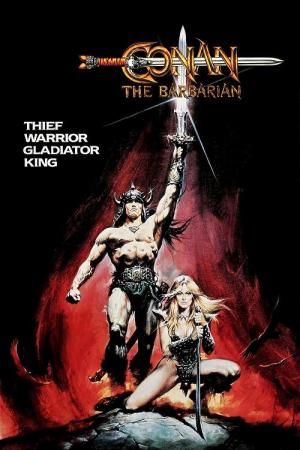
The Summer of ’82: Conan the Barbarian

Fante’s Inferno is revisiting the summer of 1982, considered to be the greatest movie summer for fantasy and sci-fi fans.

Conan the Barbarian

Conan the Barbarian
Copyright 1982 – Universal Pictures

Release date: 5/14/82

Directed by John Milius; Screenplay by John Milius and Oliver Stone (Based on the works of Robert E. Howard)

Starring: Arnold Schwarzenegger (Conan), James Earl Jones (Thulsa Doom), Sandahl Bergman (Valeria)

Famous quote:  When asked “What is best in life?”  Conan responds: “To crush your enemies, see them driven before you, and to hear the lamentation of the women.”

The film begins with a blacksmith forging a sword…

I always loved that opening sequence.  The art of creating the weapon got me hooked on the story at age 10, and watching it this week at age 40 reminded me why.  At that point in my young life I was feeding myself a steady diet of fantasy books, Dungeons & Dragons, and Frank Frazetta’s artwork.

This isn’t a review, per se.  One thing I can’t bring myself to do with this film, or most others I enjoyed in my youth, is look at them with the jaded snarkiness that most other people would approach the film with in 2012.  I won’t judge the film by the primitive effects by today’s standards, the acting ability of Arnold at that point in his career, or whether or not I outgrew the film/genre as I got older.  For me, it comes down to these points:

1. Does watching it now remind me of why I enjoyed it back then?
2. Does the story still hold up for me?
3. Does the film reinforce what I like about the genre?

And so, how did it hold up for me when I watched it 30 years later?  Much better than I thought.  Although the special effects (or lack of special effects) would come across as dated by today’s standards, I actually enjoyed it more for that reason.  I prefer the old school approach on 35mm over today’s CGI overload.  If done today, the number of Thulsa Doom’s attackers in the opening raid of Conan’s village might ave been multiplied by 100 and the “real” actors might have been filmed against a green screen.  While I appreciate the progress that has been made with CGI (I’m not a luddite), and a filmmaker’s desire to create a landscape with these tools, regardless of how well it’s done it’s still a distraction to me as a viewer (although one CGI film that I thoroughly enjoyed was Sky Captain and the World of Tomorrow).  I will always have an appreciation for the lost art of the matte painting.

If there was anything I would criticize about Conan the Barbarian, it would be the slow pace of the film.  Clocking in at 2 hours and 7 minutes, a half an hour could have been cut just by picking up the pace in many of the scenes.

One thing I didn’t realize was how little dialogue Arnold had throughout the film, unless you count the 87 times he said AAAGHaaghAAAGHaaAGH!!!! when tortured or beaten.

Seeing the final shot of an older, wiser, King Conan on his throne at the end of the film and reading the final lines on the screen reminded me of how I couldn’t wait for the sequel back then.  Two years later my childhood friend Kevin and I saw Conan the Destroyer in the theater.  Even at age 12, the fantasy/D&D fan in me didn’t take the story as seriously as Conan the Barbarian.

This film was like an old Dungeons & Dragons campaign on celluloid.  Two swords up.

Tagged , , , , , , , , ,

The Summer of ’82

With the anniversary upon us, I’ve been seeing quite a few articles proclaiming the summer of ’82 as one of the best summers for movies ever.  This Yahoo slideshow sums it up pretty well.  My first thought regarding the summer of 1982 is usually, “Holy crap, has it been 30 years?”  The second is: “Holy crap, that was a great summer for movies!”

I turned 10 that summer, and in addition to going to the local movie theater, most of that summer was spent reading Marvel comics, playing video games (on the Atari 2600 and at our local arcade) and playing Dungeons & Dragons a couple of times a week.  In short, it was heaven.

I’ll admit, scanning through these 15 films, there are a few that don’t really resonate with me in 2012 (The World According to Garp, An Officer and a Gentleman, and Night Shift), but most of the rest are still favorites of mine and it boggles my mind that they were released over the course of a few months.  Several fall into the category of “when I flip through the channels and it’s on, I watch it to the end.”

My favorites from the list:

Conan the Barbarian (5/14/82)
The Road Warrior (5/21/82)
Star Trek II: The Wrath of Khan (6/4/82)
Poltergeist (6/4/82)
E.T.: The Extra Terrestrial (6/11/82)
Blade Runner (6/25/82)
The Thing (6/25/82)
The Secret of NIMH (7/2/82)
TRON (7/9/82)
Pink Floyd: The Wall (8/6/82)

One film that surprisingly isn’t on this list is Clint Eastwood’s Firefox (6/18/82).

I’d like to revisit each of these films in blog posts corresponding to the week they were released, but as you can see I’m a bit behind schedule with the first six, but the 30th anniversary of the release of Blade Runner (one of my favorite movies of all time) is coming up, so I’d better get cracking on that one.

On a side note, thank you to everyone that has been reading and following my blog.  The latest stats show visitors from 26 countries.  Please feel free to comment, as well as follow me on Twitter (@Fabrizio_Fante).  Emails are also welcome at fabfante (at) gmail (dot) com.

Tagged , , , , , , , , , , , , , , ,

Movies for Memorial Day

With Memorial Day coming up on Monday 5/28, I would like to thank the all active members and veterans of the armed forces for their service and sacrifice.

One of my favorite movie genres has always been the combat film.  Not so much for the action sequences, but for the characters.  Growing up in the 70’s, there was always a WWII or Korean War film playing on Saturday afternoons.  Some of my favorites:

Sahara, Battlefront, Von Ryan’s Express, The Great Escape, The Bridge on the River Kwai, The Steel Helmet, The Green Berets, and Sergeant York

Some notable films to watch on TV this Memorial Day weekend:

Turner Classic Movies:

The Steel Helmet (Sunday 5/27 at 4:45 PM)
Sergeant York  (Sunday 5/27 at 8:00 PM)
Tora! Tora! Tora! (Sunday 5/27 at 10:30 PM)

The Green Berets (Monday 5/28 at 9:15 PM)
The Great Escape (Monday 5/28 at 11:00 PM)

Spike TV will run a marathon of all ten episodes of Band of Brothers on Monday 5/28 from 9:00 AM to 9:00 PM.

Of all of the war films I’ve seen, Sam Fuller’s The Big Red One (1980) is my favorite of the bunch.

Written and directed by the legendary Sam Fuller, this film was a based on his personal experiences as a GI in World War II.  The main character Private Zab (played in the film by Robert Carradine) is based on Fuller.  The film follows The Sergeant (played by Lee Marvin) and four members of his squad called The Four Horsemen (played by Carradine, Kelly Ward, Bobby DiCicco, and Mark Hamill) through Africa and Europe from 1943-1945.  But this film only scratches the surface of Sam Fuller’s experiences during the war.  I highly recommend Fuller’s autobiography A Third Face for more about this part of his life.

I had the opportunity to interview Mark Hamill at the 2011 New York Comic Con.  He was there to promote a comic book project he was involved with, but I couldn’t help asking him about his experience working with both Sam Fuller and Lee Marvin on The Big Red One:

Hamill:  Oh my God, it was one of the greatest experiences of my life.  I learned more about World War II from them than I ever learned in history books.  Because they were both veterans.  With all due respect to Steven Spielberg, it’s second hand from him.  With Sam you’d go “This is crazy, why would I do this?”  And he would say “Well I’ll tell ya it wasn’t you, it was a guy by the name of Colowitz, and he was handsome like you…”  And he would tell you what really happened!  It was just probably the most profound experience of my career.  I can’t think of a director I like better than Sam.  And Lee Marvin was not only a brilliant actor but an amazing storyteller and a hilarious person.  Boy was he funny.  And I could make him laugh, which he loved.  He loved to laugh.  He was not an attention hog, he loved to hear stories from you.  Yeah, he was fantastic.

Tagged , , , , , , , , , , ,

Avengers Fans Assembled! Bring on the Comic Book Movies!

I’m blown away by the $207 million U.S. box office gross for The Avengers last weekend.  Sadly, I wasn’t able to be a part of the opening weekend but I’ll definitely check it out next week.

Some non-comic book fans may lament the number of comic themed films that will be coming out in the next few years (Avengers 2 without a doubt, Captain America 2, Thor 2, Wolverine 2, Man of Steel, etc.) but I can’t get enough of them.  My prime comic book reading years were the late 70’s to the mid 80’s, and with the exception of the Superman films it was slim pickin’s for comic book heroes on the big screen during that time.  I remember back around 1981 my brother mentioned an X-Men movie was in the works.  I have no proof of the accuracy of that statement, but it got my 9 year old mind racing to the possibilities of who would play Professor X, Cyclops, Phoenix, Storm, Colossus, Nightcrawler, Wolverine, Angel and Sprite.  And for years I waited…and waited…until 2000 when X-Men was released in theaters.  My brother drove down from Boston and we watched it in our hometown theater just like we did Superman: The Movie over 20 years earlier.

With The Avengers performing way above expectations, my mind is racing again to the possibility of even more comic book films.

Upcoming comic related films I’m looking forward to:

The Dark Knight Rises – Very high hopes for this one.  And I’ll have a surprise post the week of its release.

The Amazing Spider-Man – I was puzzled when they originally announced this reboot.  I didn’t think I would want to see another origin story, but the new trailer reminded me of what I didn’t like in the first Spider-Man movie, particularly Mary Jane’s role as Peter’s love interest instead of Gwen Stacy.

Man of Steel –  I’m not sure what to expect with this.  Superman Returns was a disappointment, mostly because it needlessly re-hashed plot points from Richard Donner’s Superman.  One of the main criticisms I’ve heard from fellow fans is that it’s time for Superman to fight a super villain like Doomsday.  I agree.

Dredd – After the 1995 debacle, I didn’t think Judge Dredd would ever get another shot at a feature film.  Dredd will be released in the U.S. this September with Karl Urban (Star Trek, The Bourne Supremacy) in the title role.

Here’s my wish list of comic book films.

In development:

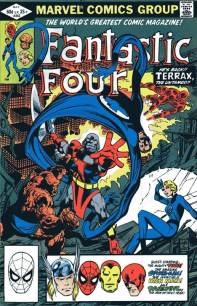
Fantastic Four #242
Copyright Marvel Comics

Fantastic Four – I wasn’t impressed by the first two Fantastic Four films.  The super team that ushered in the Marvel Age of comics didn’t get the respect it deserved.  There’s a reboot in development (Fantastic Four Reborn) at Fox.  Fingers crossed.

Daredevil #230
Copyright Marvel Comics

Daredevil – I’m looking forward to this reboot based on the Born Again arc by Frank Miller and David Mazzuchelli.  But the storyline I always hoped to see on film would be from the Frank Miller/Klaus Janson run.  Unfortunately the first movie took away the possibility of a Bullseye/Elektra story.

Holding out hope:

Doctor Strange #56
Copyright Marvel Comics

Doctor Strange – I remember watching the made for TV version of Doctor Strange in the late 70s.  I don’t remember too much of it, except the terrible plot, acting, costumes, and special effects.

Justice League of America #165
Copyright DC Comics

Justice League – George Miller (Mad Max, Happy Feet) was attached to direct this several years back.  Hopefully Warner Brothers will give their super team the big screen treatment.

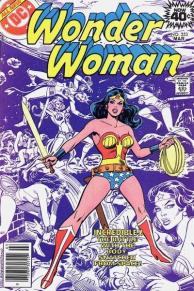
Wonder Woman #253
Copyright DC Comics

Wonder Woman – One of the Golden Age characters that I would like to see set in the 1940’s.  Superheroes fighting in World War II is kind of a recurring theme on my wish list…

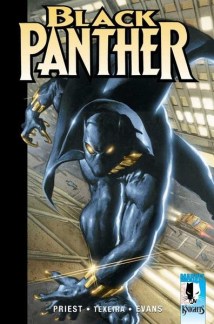
Black Panther
Copyright Marvel Comics

Black Panther – I’d love to see a Black Panther feature film set in both Africa and New York City.  He’s a very underrated character in the Marvel Universe.  At the very least he should make an appearance in an Avengers or Fantastic Four movie.

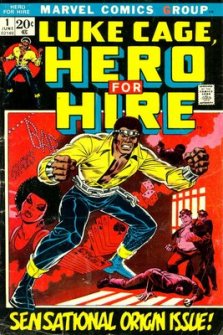
Luke Cage, Hero For Hire #1
Copyright Marvel Comics

Luke Cage – Nothing like Luke Cage, Hero For Hire, opening up a can of whoop ass.  If this film ever gets made, please set it in the 70s.

Giant Size Invaders #1
Copyright Marvel Comics

The Invaders – Captain America, The Sub-Mariner and The Human Torch fighting the Nazis in World War II.  Need I say more?

Awhile back I had asked a comic artist what he thought of the large number of comic book related movies that had been released over the last five years.  His response:  “We rule the world now!”

I couldn’t agree more!

Tagged , , , , , , , , , , , , , , , , , , ,

Interview: Willem Dafoe on “The Hunter”

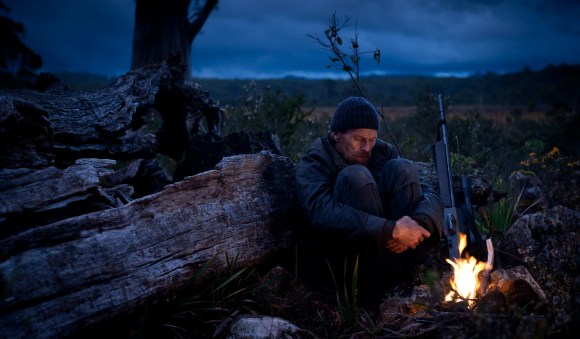
Willem Dafoe in THE HUNTER, a Magnolia Pictures release. Photo courtesy of Magnolia Pictures.

Willem Dafoe’s latest film The Hunter is one of three current releases for him along with Disney’s John Carter and the independent film 4:44 Last Day on EarthThe Hunter, directed by Daniel Nettheim, tells the story of Martin David, a mercenary sent to the forests of Tasmania by a biotech company to hunt what is believed to be the extinct Tasmanian tiger.  As Martin scouts the terrain, he is drawn into a local conflict between loggers and environmentalists, and helps struggling mother Lucy Armstrong (played by Frances O’Connor) whose environmentalist husband has gone missing.  The film also co-stars Sam Neill (Jurassic Park, The Dish).

Dafoe met with the press for a round table interview on March 14 in New York to discuss the film, hunting, and his approach to acting.

Do you have a background as a hunter?

No, in fact when I was a kid – I grew up in Wisconsin, deer hunting is very big there – and during deer hunting season it was a father/son ritual that you would go out deer hunting.  And at the end of that weekend you would have that buck on the hood of your car and you’d go up and down the main drag beeping your horn.  It was really primitive.  My father didn’t hunt, and I would be the only boy in the class for about a week because it was such a part of the culture they would all get permission to leave for father/son bonding.  So I’d sit there with all the girls (laughs).  It was nice when I got older, you know?  (laughs)

Was that the week you decided to start acting?

(laughs) Yeah, something like that.

Willem Dafoe in THE HUNTER, a Magnolia Pictures release. Photo courtesy of Magnolia Pictures.

What surprised you the most about filming in Tasmania?  And also could you compare and contrast your experience with working in the jungle to this movie and say a movie like Anti-Christ where you were actually being hunted.

In Tasmania, the weather was really volatile.  It could be snowing and really cold and two hours later it could be sunny and warm.  I mean, a lot had to do with elevation but we were moving around a lot.  So the weather was brutal and obviously, particularly for the sequences when I’m out in nature, I’m playing scenes with the weather, I’m playing scenes with nature.  It’s a powerful thing when you’re filming because you can’t control it so you have to be flexible and you have to invent things, and you have to know the story you want to tell, but you have to make adjustments all the time.  So it has all the energy and curiosity and problems of an expedition.  So I’m out there with a small crew, so on some level it kind of mirrors the hunt for the tiger.

I’ve been in the jungle a lot through the years and you know, jungles when you really get down to it, they’re all the same.  Nature gone wild.

In the spirit of your character, did you keep a distance between yourself and the children in the film (Morgana Davies and Finn Woodlock)?

Well, not so much on the set, but actually in the scenes because naturally they’re kind of sweet.  They’re actors, but they’re kids first.  And they don’t have – even though Morgana (Davies) the little girl has done some films and people really like her in films, it’s not like they have traditional actor skills of repeating things so when you’re playing these scenes, you’re tricking them into things and in that job you can get sucked into a sweetness.  And I just found myself feeling kind of a paternal urge happening, and I thought “Boy, we gotta nip any sentimentality in the bud.”  So I was very conscious of that.  You don’t want to muck it up, you know?  If you get too soft then the ending’s never gonna land.

Willem Dafoe in THE HUNTER, a Magnolia Pictures release. Photo courtesy of Magnolia Pictures.

And when you were a cut off, isolated hunter with no human connection does that affect you when you’re not working?  Do you feel strange or different?  Or can you just shake it off at the end of the day?

The funny thing is I feel that as I get older I’m more affected by roles.  I used to say when the camera turns off the character goes back inside me.  But I feel like that’s less true.  In a role like this, all I’m doing is filming.  I’m working long days, and there’s nothing else.  I’m just doing very little besides that.  So of course, just by sheer immersion the character starts to haunt you and becomes you for a period of time.  Particularly when you’re working in a location where all your normal habits are broken and you have nothing to remind you of who you are normally, and we were working in quite remote areas.  So what I’m dealing with is I’m applying myself to a fiction in a funny way, and you’re inviting yourself to be flexible.  You’re inviting yourself to transformation.  So it can run really deep, but not in a scary way.

Does it take away the joy of being an actor?

No, that is the joy of being an actor.  I mean, the joy of being an actor is taking on someone else’s point of view and someone else’s circumstance, getting the shift of perspective.  That’s what I like about film in general is when they just by kind of learning or seeing something new, you go ‘Man, you know I never thought of it that way.’ Or you say “Oh, I always thought this was this, but it’s really this.”  As an actor you actively get to do that.  You have empirical evidence, it’s not just an intellectual shift of point of view.  It runs deep, you experience it.  And that’s a beautiful thing.

Magnolia Films’ The Hunter is currently in theaters.

Tagged , , , , ,

Interview: Director Daniel Nettheim On His New Film “The Hunter”

Daniel Nettheim, director of THE HUNTER, a Magnolia Pictures release. Photo courtesy of Magnolia Pictures.

Australian director Daniel Nettheim helms the new film The Hunter, an environmental thriller adapted from Julia Leigh’s 1999 novel.  Academy Award nominee Willem Dafoe (Platoon, The Last Temptation of Christ) plays Martin David, a mercenary sent to Tasmania by a mysterious biotech company to hunt what is believed to be the last Tasmanian Tiger in existence.  Along the way Martin is drawn into a local conflict between environmentalists and loggers, and against his nature helps struggling mother Lucy Armstrong (played by Frances O’Connor) whose environmentalist husband has gone missing.  The film also stars actor Sam Neill.

I had an opportunity to participate in a round table discussion with Nettheim to discuss the film, working with Willem Dafoe, and the challenges of shooting in Tasmania.  The questions below were asked by the group in attendance.

How close to the book did you want to keep the script?

There were things in the book that I definitely wanted to hold on to, which were things that attracted me to it in the first place.  So we held on to the premise, we held on to the characters, we held on to the locations, we held on to the tone, we’ve held on the essential dramatic arc, and what we’ve changed is certain aspects of the ending, and we’ve really had to find ways to externalize the drama.  Most of the book was a man alone in the wilderness and it was all inside his head.  As a filmmaker that’s not so easy to do.

In the film, the Tasmanian vistas are absolutely breathtaking.  As a director did you find the terrain incredibly challenging to work in?

People had warned me that the weather can change, you can get four seasons in one hour.  The cinematographer had worked there before and he said to me very early on, to forget any notion of continuity of light across a scene.  For that reason we kind of deliberately didn’t have long two hand dialogue scenes in the exterior because you can start it in the sun and you’ll finish in the rain.  The snowstorms you see in the film, we were hoping to get snow, but that snuck up on us.  That morning was sunny.  We saw the clouds come in at lunch time and half an hour later we had snow.  So I just had to quickly say, “Alright guys, let’s quickly scrap this afternoon’s plans.  We’re going to shoot the snow scenes.”  So as a crew we had to be very adaptable and responsive to the weather because it’s one thing you can’t tame.  As filmmakers you try and control everything as much as you can.  But the weather, particularly in Tasmania, we just had to roll with the punches.  And for that very reason, when we’re talking about Willem’s wardrobe, we decided that when he’s out there hunting, he’s only going to have one outfit.  That way, not only can we quickly change what we meant to shoot to respond to the weather, but once I was in the edit I could move anything anywhere and it would fit.

There seems to be a trend in films recently like The Grey and other similar films with regard to man vs. nature.  What do you think this film really speaks to thematically to that man vs. nature story?

It’s interesting because it starts off as a man vs. nature story and ends up as a man vs. himself kind of story in a way.  This is a man whose work involves trying to be at one with nature, it is a hunter.  And as part of Willem’s training for the film we learned techniques like how to move across the landscape so animals don’t hear you, how to use what’s around you to build your traps and snares.  So it’s kind of paradoxical because he’s at both one with nature – he understands nature, he thinks like an animal – but his business there is essentially very destructive.  So what we wanted to speak about was really the uneasy relationship that has always existed between mankind and the natural environment.  This story of what happened to the Tasmanian tiger is a great kind of historical case in point, but that story is continuing with the battle to save the native forest which you see in the film, and the conflict that’s going on between the loggers and the environmentalists.
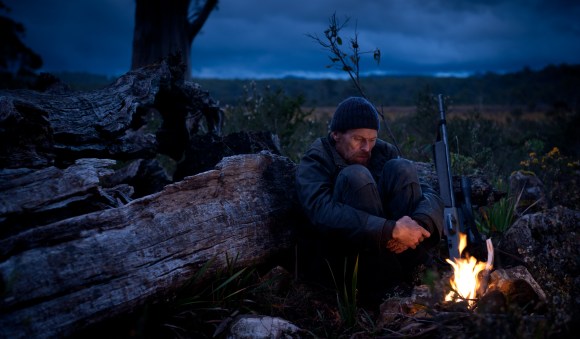
Willem Dafoe in THE HUNTER, a Magnolia Pictures release. Photo courtesy of Magnolia Pictures.

Is Willem Dafoe the only actor you had envisioned in that part of Martin David?  He was so perfect for it.

He was the only actor we approached.  I had envisioned him in the part from quite early on in the writing because it’s helpful to have a face in mind when you’re writing scenes.  There was a list of people, but fortunately Willem said yes.

What are your thoughts on Willem’s take on the character?

One of the things that was strong in the book was this character had for whatever reasons, shut himself off from experiencing human emotion in a way.  He was a character who was assumed to be most comfortable when he was alone in the wilderness.  I identified with aspects of that, sometimes I like to get away from people, it’s great, but I found a way to function in society and most people do. This character chose not to.  And Willem and I didn’t talk about what pain he might be running away from, what might have been happening to him to make him like that.  We didn’t investigate that part of the psychology, we just took it as a given that he’s a man that’s very closed off but over the course of this story he begins to open up to the possibilities of another way of being.  And look, it does cause him incredible pain, incredible loss.  But that is part of the human experience.

Did you have any conflicts with Willem on set in terms of the vision of how you think the movie should be?  Did you lock horns at all?

No, we had a mutual understanding of the character and we worked all that out in pre-production.  I invited Willem’s input on the last draft of the script.  So the character stuff was clear and most of our work on set was about matching up the expectations of the scene on the page as compared to the physical realities of where we were.  Ok, it says, “Martin lays a trap.”  What’s that going to look like?  Where’s that going to happen? Which parts of the setting of the trap are we going to see?  What parts does he need to learn?  There were moments where his instinct for the character contradicted what I think the scene needed for the story.  And he respected that.  We would find a way to get both.  But I kind of figured he should take ownership of the character, he should protect that character, and I’ll just keep my eye on the story and the big picture, and we’d work together to make that happen.

Was it quiet crew?  Was it a small band up there that was trying to get him to feel as isolated and alone as possible?

We were a pretty lean crew.  We didn’t have big trucks.  All of the lighting and grip gear could go on the back of a couple of utilities [trucks].  Usually we could drive to within a hundred meters of where we had to shoot.  But Willem, that’s where acting really came into it, he didn’t have to actually be totally isolated to feel the part.  However, he did insist on doing everything himself.  He had a backpack that was always weighted, and he would not be doubled.  There’s helicopter shots where you see a little speck, and that’s Willem.  He wouldn’t let anyone else do it.  Some of the most spectacular helicopter shots, he had a walkie talkie.  There was an assistant hiding in some trees or in some bushes somewhere.  He couldn’t see us.  We were in the helicopter going, “Okay we’re coming up over the hill, come towards it.”  And he’d be like “Which hill, I can’t see it.”  We’d say, “Just keep walking,” and he would.  The ground was incredibly difficult to walk on.  He was deep in mud, there was leeches, and these buttongrass tufts are really hard to navigate.  He was a real trooper.  The things he did for authenticity I was impressed by.

Could you talk about Morgana Davies who plays Sass in the film.  She’s a real scene stealer.  What was the casting process like for that role?

I’d seen Morgana, she’d done one film before which was a French/Australian co-production called “Betrayed.”  It played at Cannes a couple of years ago and she had a small role.  I liked her, I met her maybe on the third day of casting but then I met another 200 girls after that because you don’t want to throw all of your eggs in one basket.  If you’ve got one great kid and no backup, and that kid gets sick or pulls out, or has stage fright, and suddenly they can’t perform you need to know you’ve got someone standing by.  So although I liked her we kept looking.  We came back to her, she was very natural, she was outspoken, she was a real tomboy, she was confident, she didn’t really care if she was going to be an actress or not.  Her mother was really supportive, but equally if the girl decided she didn’t want to act anymore her mom wasn’t going to push her.  So she was a kid.  She was primarily a kid and then she had some great natural abilities.  She was close to her character.  With kids, obviously kids that age can’t rely on instinct or you can’t rely on technique or training like you can with someone like Willem or Sam Neill.  You’ve got to rely on what they do naturally.  And we said to her mom don’t rehearse the scenes at home.  Yes, she should learn her lines, but don’t rehearse them.  I had a kids acting coach on set as well so they talk about the meanings of the scenes and they riff on that, but we never over rehearse stuff.  [The cursing] was part of the script.  She came to me and said, “I, Morgana, would never say that, but I know that Sass says that.”

In the film, you used real footage from the 1930’s of the last Tasmanian tiger.  Was it difficult to get permission to use this?

That footage wasn’t difficult to get a hold of.  It’s quite famous footage.  There’s maybe eight or ten minutes of footage in existence in the world of the Tasmanian tiger when it was alive.  That footage was partly owned by the Hobart Museum and partly owned by the National Film and Sound Archives.  One frame belongs to someone, and one frame belongs to someone else.  So we had to go to both bodies for permission.  When they sent us up what they said was the best quality master available, on an HD cam or something, it was really bad quality.  It was a very low res digitized image.  And this was the coup: we got them to send us the original 16mm print, made a new High Def digitization of it.  And no one’s ever seen it projected like that before since the 1930’s.

Did you have a personal connection emotionally with the Tasmanian Tiger?

I had a personal connection with the landscape more than anything initially.  The descriptions in the book were really beautiful.  I knew that landscape a little bit because I traveled a bit in Tasmania.  I knew it was a place that hadn’t been filmed much.  It’s hard to have a sentimental feeling about general animals – kangaroos, wallabies – which are hunted for meat and for sport in Tasmania.  But the Tasmanian Tiger itself, it’s become part of our national mythology.  There’s a great sense of national guilt about what happened to it, and I think this myth that goes on that it still might be alive in a way is kind of a dangerous one because it lets people off the hook in a way for that kind of destruction.  But I think it’s also become symbolic of the way that progress can decimate nature.

Do you think there really can be some type of balance between the industrial side and the environmental side in that area?

I think there can.  In areas like that in the U.S.and else where there are plantation forests, a sustainable timber industry.  And in Tasmania, one third of the island is world heritage area or national parks.  It’ll never be touched, but where the frontline of these battles is there’s these borders, the perimeters of these national parks, that are constantly being shifted.  The government is constantly allocating little sections to the logging companies of these old growth forests which will become toilet paper for the Koreans, literally, and never exist again.  But that’s the front line of this battle, and it’s very heated.  You go down there and it’s a very, very emotional debate.  We spoke to people on both sides, they were all very articulate.  We were clear that we wanted to depict both sides as characters in parts of the story and we wanted to make sure we were presenting them in a fair way.  Obviously I have my own feelings about that kind of conflict.  There was a point where there was close to some kind of truce when we were down there, but I think it flared up again.

What would you say would be the most important thing you learned as an independent filmmaker making this film in Australia, and what advice would you have for filmmakers that would want to work in this type of environment?

There were pluses and minuses.  One of the things that really worked in our favor was the story of the film was very contained.  There was the house, there was the pub, and there was nature and a couple of other small locations.  So it was achievable.  We got a lot of support from the state of Tasmania who wanted us to come down and present their landscape in a way that would encourage tourism, and it’s worked for them.  The budget was very lean, as they always are.  But we couldn’t make that film without Willem Dafoe.  Which is a paradox because we had the Australian actors union going, “How dare you bring in a foreign actor.”  In Australia we receive foreign subsidies to help finance cinema.  All our films get government subsidies, but we’ve got the government saying you need to make films that are going to be exported overseas.  It has to play overseas for foreign audiences.  So it was fortunate that we had a character who was an outsider.  It allowed us to cast someone like Willem who could bring a name to the project but not in a cynical way.  It was right for the character that he play it.  So yeah, casting was critical, and making sure that all of the money was on the screen.  None of us got paid much, but we wanted to make sure that every cent we spent translated to some amazing landscape.  Up until the last week we weren’t sure if we could afford the helicopter shoot.  The producer would say, “If you’re going to do overtime today, you’re not going to get your chopper.”  So it was very lean but the chopper was important because it really just opened up that world.

Magnolia Films’ The Hunter opens in theaters on Friday April 6th.

Tagged , , , , , ,

Abel Ferrara on 4:44 Last Day on Earth

Independent film director Abel Ferrara (King of New York, Bad Lieutenant) uses New York City as the backdrop for his latest film, the apocalypse themed drama 4:44 Last Day on Earth.  The film stars Willem Dafoe (Platoon, John Carter) and Shanyn Leigh (Public Enemies, Go Go Tales) as Cisco and Skye, a New York City couple reflecting on their lives and relationship on the eve of the end of humanity.

Ferrara sat with journalists for a round table discussion in New York.

What was the significance of the time 4:44 for the end of the world?

Shanyn (Leigh – lead actress) is a numerologist.  4:44 has a very heavy Chinese meaning.  Four means death.  That’s a heavy meaning.  There’s that point in it, that 4:44 means death.  They may have to change that title in China.  But at the same time the film is in New York.  4:44 is only on the East coast.  The world is going to end at 1:44 in Los Angeles.  And the world is going to end at 10:44 in the morning in Rome, right?  In New York the bars close at 4.  It’s almost 4:44 is the time like if it’s not happening by 4:44, go home.  At what time is the night over?

Is there a part of you that truly fears the end is coming?

I don’t know about personally fearing it, I can accept it.  There are much more advanced civilizations than us that have gone down.  One thing I want to make sure of with this film, this wasn’t a meteorite hitting the earth.  This was due to man’s destruction of what is out there.  You can buy in to Al Gore’s idea, you can dismiss it.  You can say, because a bunch of hackers come up with a bunch of fu**in’ e-mails that might or might not be real.  You know, there’s a lot of words going back.  But it’s like the Dalai Lama says in the movie, we don’t control nature.  If we don’t understand we’re part of nature and that if we think we can abuse it and not use it.  You’re going to be in for a surprise like the people in Easter Island and there’s a lot of other civilizations, too.

Where would you want to be at the end?

I think that film is pretty much what I would be doing.  I mean, I’m not going to go to Times Square and watch the ball come down.

(SPOILER ALERT) At certain points in the film you showed a disturbance in the atmosphere.

A disturbance of wind.  Because outside in the wind there’s a disturbance of the atmosphere.  If the ozone is protecting us from the rays of the sun, and the ozone is gone, then that’s it.  These kinds of films are not scientific documentaries.  I had my guy from Stanford, and he said, “Listen, go with the Twilight Zone.”  We’re dealing with fiction.  I just wanted to make sure it came from the earth.  What would happen if we didn’t have the ozone protecting us from the sun?  It would be like you’re in a f**king, you know, microwave.  How painful is that gonna be, I don’t know.  The film isn’t about that.

Come on, look outside today, it’s March.  This is f**kin’ March.  Sure, you could say, “Okay, it’s just another day.”  You know, come on.

It’s going to be what they say it’s going to be.  The guy that come up with aerosol spray deodorant, did he think he was destroying the ozone?  No, but if you’re not aware of it…but the worst part is to be aware of it and not give a f**k.  But what are you going to tell them [China and India] they’re not gonna have their 50’s [era]?  They’re not gonna have, you know what I mean, age of consumerism?  You know, blatant global destructing consumerism.  What are we going to say?  “Okay I had it and it’s really not that big a deal anyway.  Stay on the farm.”

(SPOILER ALERT) In 4:44 there was a very strong theme about sobriety. 

I’m drinking water, so it really was about that.  Obviously he’s in the program, Willem (Dafoe’s character in the film Cisco).  He’s counting days.  And then came that moment.  He came to the drug dealers obviously to score and then he bumps into this cat with 20 years sobriety.  So the point was, was he going to get high or wasn’t he going to get high?

What neighborhood did you grow up in?

I was born in the Bronx, and I grew up in upstate New York.

The neighborhood I came from was very Italian and very protected.  It was very dangerous in a way of white street gangs when I was really young.  But then I moved away from it.  But then I moved to a town that was like the crack capital of New York, Peekskill.

What are your thoughts on how New York’s changed in the last 20 years with all of the cycles the city goes through over time?

This city has changed.  It became very much international.  It started with Giuliani, it became very much focused on the money.  It’s become an international financial capital, which it’s always been.  But it’s spread from just Wall Street and neighborhoods like here (midtown) to almost all of Manhattan.  So if you want to go to Manhattan you gotta go to Brooklyn now.  Brooklyn is the new Manhattan.

4:44 Last Day on Earth is currently in theaters.

Tagged , , , , , ,

Happy Birthday William Shatner!

Happy 81st birthday to actor (Star Trek, T.J. Hooker), director (Star Trek V: The Final Frontier, The Captains), author (TekWar) and sci-fi icon William Shatner.

I met him briefly at Wizard World New York in 2009.  Unfortunately I didn’t get a chance to interview him, but he did autograph this incredible watercolor painting I commissioned from Marvel artist Paolo Rivera (Mythos, Amazing Spider-Man, Daredevil) earlier that day.

Painting by Paolo Rivera
Star Trek copyright Paramount

Needless to say, it’s one of my favorite pieces of art in my collection.

Tagged , ,

40 Years of The Godfather

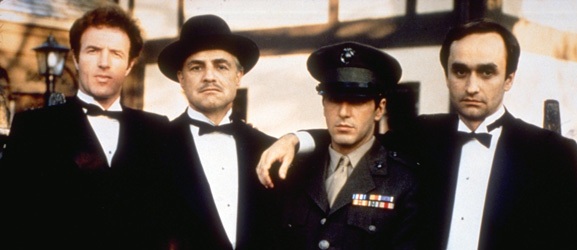
Photo copyright Paramount Pictures

I completely forgot that today was the 40th anniversary of the premiere of The Godfather.  Or as it’s referred to at my parents house: Il Padrino.  A very happy birthday to Michael, Sonny, Fredo and Don Corleone.  Cent’anni!

But let me make three things VERY clear:

1.  We are not, nor have we ever been, involved in organized crime.

2.  I was not named after one of the characters.  The fact that I was born several months after this film was released is strictly coincidental.

3.  I was not born in Italy.  I was born in Westchester, grew up in Westchester. I was given an Italian name just in case my family decided to move back to their home country.

Up until my early 20s, one of the first questions I would hear after introducing myself to someone with a non-Italian last name was: “Were you named after that guy in The Godfather?”

After too many years of this, my response became “Yes, my mom insisted that I be named after an assassin in a mafia film.”

Now that I’ve cleared that up, let me say that The Godfather to me is like The Shawshank Redemption to most other folks.  Every time I stumble on it flipping through the channels, I have to watch it through to the end regardless of how far into the movie it is.  Over the course of almost forty years, I’ve lost count of how many times I’ve seen it.

My folks let us watch it at a very early age with no thought as to whether it would be inappropriate for kids.  To them, it was a film about Italians and their experience in America.  They let us watch it for cultural purposes.  That was the case for most Italian movies we saw, 99% of which were not mafia related.  Remind me to tell you about the time I saw Lina Wertmuller’s Swept Away at age 8.

But that in no way means that I consider this film an accurate representation of Italian-American life.  To this day, I still haven’t seen a film or TV show that does.  Just because I love this film, doesn’t mean I condone mafia activity.  To me, it’s a beautiful film.  Period.

A great article on Richard Castellano (“Clemenza” in the film) from last Sunday’s New York Post here.

Tagged , , , , , , ,