Adieu, Moebius. Merci pour l’inspiration.
More on his life and career here.

Jean Giraud (Moebius) Self Portrait
Adieu, Moebius. Merci pour l’inspiration.
More on his life and career here.
Jean Giraud (Moebius) Self Portrait
Comic book publisher and icon Stan Lee and 1821 Comics co-founder Terry Dougas unveiled their latest graphic novel Romeo and Juliet: The War at the 2011 New York Comic Con. The hit stores January 25th, is Shakespeare’s classic Romeo and Juliet reimagined as a sci-fi fantasy set in the future. It was written by Max Work with artwork by Skan Srisuwan.

Copyright 1821 Comics
From the press release:
ROMEO AND JULIET: THE WAR takes Shakespeare’s star-crossed lovers and places them in the futuristic sci-fi/fantasy Empire of Verona, the most powerful territory on Earth. The MONTAGUES, powerful cyborgs made of artificial DNA, and the CAPULETS, genetically enhanced humans known for their speed and agility, worked in tandem to destroy all threats to the city. With no one left to fight, the Montagues and Capulets found themselves a new enemy: each other.
“This is the graphic novel I’ve always dreamed of doing. Take one of the world’s greatest stories, known and loved throughout the globe, place it against the background of a future age, a more violent, science-gone-mad age–embellish it with the most powerful, dazzling, illustrations ever seen and produce it in the largest, most impressive format of all. Romeo and Juliet: The War! It’s the crowning achievement in this, the age of the graphic novel.”
Added Terry Dougas of 1821 Comics, “Last year we announced the formation of our company and our plans to create the first in a series of graphic novel books and today we are proud to unveil one of the most highly anticipated books of our time ROMEO AND JULIET: THE WAR. We are treating this book like a studio tentpole release, and judging from the fan reaction today this property has a tremendous amount of sequel potential beyond just books. It is also an honor and privilege to be working with one of the most iconic and creative minds today comic legend Stan Lee and POW! Entertainment, we have the best partner in the business.”
I caught up with Lee and Dougas on the first day of the New York Comic Con.

What was the genesis of this particular project and how did you get involved?
Lee: Actually Terry Dougas came to me one day and said, “Why don’t we do Romeo and Juliet and update it?” And I loved the idea. He decided if we set it in the future, the Capulets and the Montegues can each have a superpower. And when they fight, it becomes the kind of story that superhero fans love to read, but we tried to keep all of the ingredients and all of the elements of Shakespeare’s Romeo and Juliet. So hopefully if you’re a Romeo and Juliet fan you’ll love it, and if you’re a superhero fan, you’ll love all of the excitement and the superhero stuff that’s involved in the story!
Dougas: It’s just cool to set in a different environment for everyone to see. Because I knew it took place back then, of course, but setting it in a futuristic environment with all of these gadjets, all types of audiences can read it or watch it. We kept the skeleton, we just made sure we respect the original piece of art.
How is the process working together? How it is working with Terry, and how is it working with Stan?
Dougas: He is such a diva. (laughs).
Lee: It’s great working with Terry because I can brow-beat him. I yell at him. (laughs). No he’s a great guy. He has more ideas and more enthusiasm than anyone I’ve met in a long time. I mean every time I talk with him he comes up with something new. I thought I was creative, but I’m learning from him!
Dougas: For me it’s been an honor. I grew up in Greece reading his comics, it’s just an honor. I learn every day, he helps us with the company and the ideas also. And every couple of weeks we brainstorm and figure out a way to make it the way we want to see it and read it. That way we go to bed happy. Hopefully everyone likes what we’ve done, that’s why we’re doing it as a big hardcover book, 10” by 13” and give enough to the readers to hopefully satisfy them and pay homage to Stan Lee and Shakespeare.
Lee: I never knew anybody that put so much of himself into a project. The average publisher would just publish a book, promote it a little, but this man [Dougas] has been working with this, and living with it, and making posters, and setting up meetings and designing statues. He puts everything into it which I think is wonderful.
What medium was used for the artwork? Was it done mostly with computers or traditional pen and ink?
Dougas: Mostly computers. This artist, Skan Srisuwan, is a great artist. It took us a long time to find him. We went through 200 artists in order to find him in Thailand where he’s working. But he’s amazing. The cover (of the book), he did that in 48 hours, which is incredible. The hardcover book is 155 pages, so you can imagine how much work when into it because all of the panels have the same look to them. We had to make sure it’s the absolute way we wanted it to come out.
Do you think this is the future of comic publishing? Moving away from pen and ink?
Lee: More and more the artwork in comic books begins to look like illustration and is computer aided if only in the coloring. But I think there will always be a place for the regular pen and in drawings. People love those, too.
Any hints on your next project after Romeo and Juliet?
Lee: My lips are sealed, he’d kill me! (laughs)
Romeo and Juliet: The War debuted at #7 on The New York Times Best Sellers list on both the hardcover and paperback graphic books best-seller lists.
Special thanks to Theo Dumont of Dumont Marketing for the opportunity to interview Lee and Dougas.
I just saw the news that artist Ralph McQuarrie passed away yesterday at the age of 82. His concept paintings for the Star Wars trilogy were George Lucas’s guiding force for the look of the films.
I first saw McQuarrie’s work in The Star Wars Album, a “making of” book published in 1977. His concept paintings for A New Hope inspired me to draw and eventually pick up a brush and paint.
A few words from George Lucas and a slideshow of McQuarrie’s work here; a gallery of his Battlestar Galactica concept paintings here.
From the time I was six years old I was quoting movies. My teachers seriously thought something was wrong with me.
The first movie I remember seeing in a theater was Jaws. It had been re-released in my hometown as part of a double feature with Jaws 2. This was 1978 (back when our theater had only one screen). I was six years old and I can truly say it didn’t make me afraid of going into the water…I couldn’t swim (still can’t). My father took me and my older brother to see it one afternoon, and by the time we got home I was quoting Roy Scheider’s line just before he fired his M1 rifle into the oxygen tank that (SPOILER ALERT) blew up the great white.
“Smile, you son of a…” BLAM!
That line was part of my description of Jaws to Mrs. Farrell, my grandparents’ upstairs tenant, when she asked me about the movie. I may have substituted another B-word for “blam” to explain to her what Chief Brody was really trying to convey. Needless to say she was surprised by my vocabulary and retention skills at that age. Hers was the first of many baffled looks and shaken heads that would be a theme through most of my childhood.
When my father used to take us to the movies, more often than not we would arrive five to ten minutes after the movie started. We’d sit through the film, the entire credits, wait another twenty minutes in our seats in the empty theater, then watch the movie from the beginning of the next screening. Once the movie reached the part that was playing when we first arrived, Pop would get up and say, “Okay, we can go now.”
Some of my favorites back then were: Jaws, Star Wars, The Empire Strikes Back, Flash Gordon, Excalibur, The Big Red One, Time Bandits, and the only move I’ve seen three times in a theater: Superman The Movie.
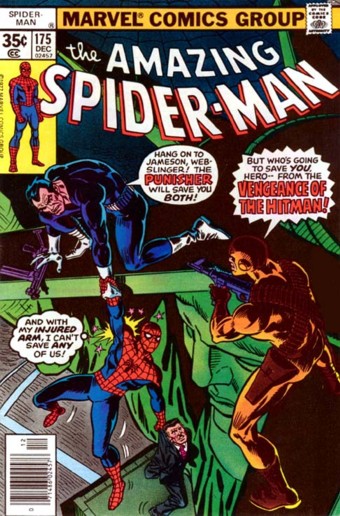
Amazing Spider-Man #175 (Copyright Marvel Comics)
The first comic book I remember owning was The Amazing Spider-Man #175 (December, 1977). The Punisher and Spider-Man were teamed up against a villain called The Hitman. The cover by Ross Andru showed The Hitman pointing his rifle at The Punisher who was kneeling at the edge of the Statue of Liberty’s crown holding up an injured Spider-Man, who in turn was holding up J. Jonah Jameson. My brother had picked it off of the spinner rack at the local convenience store and I remember just sitting on the floor of my grandparents’ house staring at that cover, trying to figure out the storyline from that one image. How did they end up on top of the Statue of Liberty? How would they get out of this situation (with Spider-Man’s arm injured, no less)? Was The Punisher a good guy or a bad guy? The story inside didn’t interest me. At age five I probably wouldn’t have understood most of it anyway. I just immersed myself in that cover, creating story upon story in my young mind. It had tension. The bad guy had the upper hand, but Spider-Man had to get them out of this. God, I love the Bronze Age.
Some of my favorite comic books of the 70s and 80s: The Uncanny X-Men (especially the Claremont/Byrne/Austin and Claremont/Smith/Wiacek runs), The Fantastic Four (the Byrne run), The Amazing Spider-Man, Marvel Team Up, Star Wars, G.I. Combat, Sgt. Rock, and Cerebus.
Please read the title of this post again: There Are No Nerds or Geeks Here.
This blog won’t be a forum for rants about how George Lucas ruined the Holy Trilogy with unnecessary CGI, whether Han shot Greedo first, or for fighting the stereotypes about comic book readers. It’s for the less rabid folks like me that appreciate movies and comic books and have an even greater appreciation for the creators that brought them to us. I’ve had the pleasure and honor of interviewing a few of them. Those interviews will be posted soon, along with reviews of lesser known movies, some classic comic book storylines revisited, and some posts on my latest passion: original comic book art. I’ll try to go light on the nostalgia (but I can’t make any promises), and even lighter on the snark.
All posts are Copyright Fabrizio Fante

In 2010 one of my passion projects, Strokes of Genius, launched on SundanceChannel.com. The web series consisted of four short video interviews with legendary Mad Magazine artists Al Jaffee and Sergio Aragones. Jaffee is best known for the Mad Fold-In, which he still paints by hand month by month since the mid-1960s. Aragones’ A Mad Look At… is a perfect storm of both his incredible cartooning skills and influence from pantomime in these non-dialogue classics.
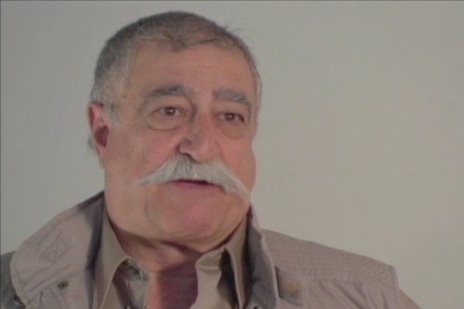
Cartoonist Sergio Aragones
The series was directed by the incredibly wonderful Gail Levin (who recently directed two episodes of American Masters for PBS on Jeff Bridges and Cab Calloway), hosted by New Yorker artist Steve Brodner (who drew and painted the on-camera artwork), and animated by Asterisk Animation (now Ace and Son). It was my first producer credit for SundanceChannel.com and I owe a huge thanks to Jeff Kunken for that opportunity.
All four videos can be seen here.
In October 2010, I covered a signing event at the Animazing Gallery in New York. Guest of honor Stan Lee, in town for the New York Comic Con, signed autographed prints and posed for pictures with the fans. Painters Boris Vallejo and Julie Bell showcased their Marvel Comics themed paintings, and mosaic artist Jorge Burtin’s giant Spider-Man mosaic was the talk of the event when an anonymous buyer purchased it for a five figure amount.
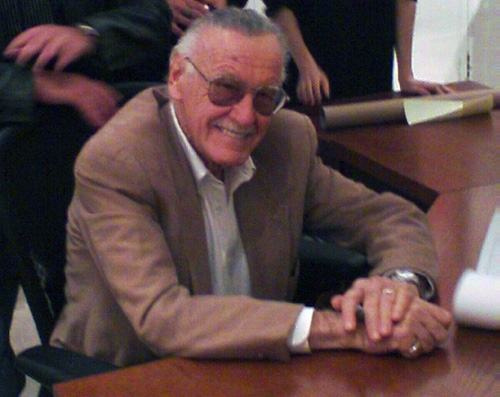
Photo Credit: Fabrizio Fante
Read it here.
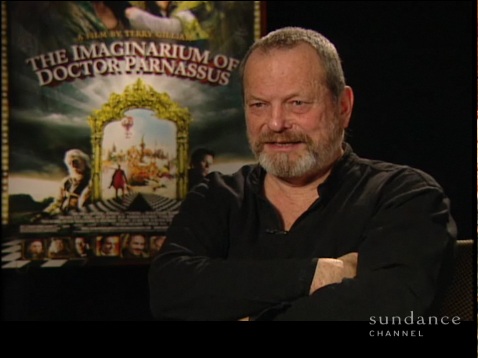
In December 2009 I had the honor of conducting an on-camera interview with cinematic genius and Monty Python alumnus Terry Gilliam to discuss The Imaginarium of Doctor Parnassus for SundanceChannel.com.
In the weeks leading up to the premiere, Heath Ledger’s death during the production of Parnassus dominated the press coverage. My line of questioning focused mainly on Gilliam’s creative, casting, and production processes but inevitably led to a question of how he was able to complete production of the film after Ledger’s untimely death. Sensitive to this, I kept the question based on how it affected production, rather than ask Terry to repeat (as he already had in other interviews) what went through his mind when he first heard that Ledger had died.
A special thanks to Terry and the camera operator who kindly gave me some additional time for some non-Parnassus questions that I hope to include in future posts.
All three parts of the interview as well as press clips from the film can be seen here.
Here’s a link to a Woody Allen press conference I covered for his film You Will Meet A Tall Dark Stranger as Sundance Channel’s “Kultur Kritic” in 2010. The film, starring Josh Brolin, Naomi Watts, Gemma Jones, Antonio Banderas, Anthony Hopkins, and scene stealer Lucy Punch (also seen in 2011’s Bad Teacher), was Allen’s “poignant mixture of angst, uncertainty, and delusion.” Yep, those were my words.
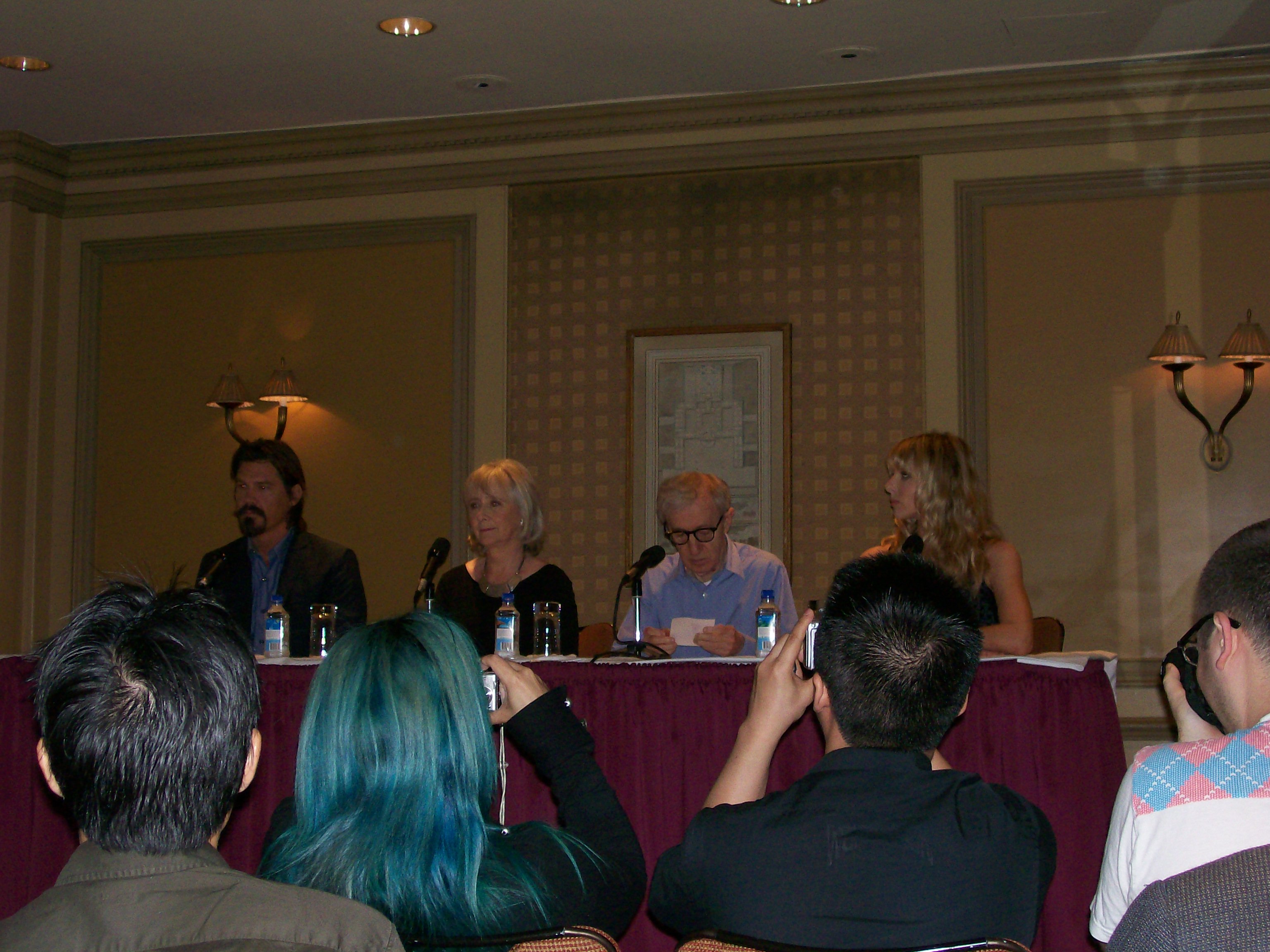
Photo Credit: Fabrizio Fante
Alfie (Hopkins) leaves his wife of forty years, Helena (Jones) to marry twenty-something call girl Charmaine (Punch). Helena copes by turning to the services of a charlatan psychic (Cristal), while her daughter Sally (Watts) struggles in her own rocky marriage to a floundering writer, Roy (Brolin). Both develop feelings outside of their marriage, Sally for her boss Greg (Antonio Banderas) and Roy for his neighbor Dia (Freida Pinto). What ensues is the usual brand of quippery, fun and drama.
Read it here.

Photo credit: Iole Capasso / Squeezed Heart Productions.
In June of 2011 I sat down with John Turturro to discuss Passione, his “musical adventure” through the beautiful and mysterious city of Naples. The film, his fourth as a director (Mac, Illuminata, Romance and Cigarettes), is told with 23 songs by contemporary Italian musical artists. Our conversation also touched on his musical influences and his relationship with the city of Naples.
Passione is currently available on Blu-Ray from Amazon.
Read the entire interview here.
 Fante's Inferno